KEAZ Corporate Platform
P.N. Metelev
managing director of the commercial division of the keaz group
We would like to thank the Only team for their excellent execution of the project, their high level of professionalism, their dedication, and their ability to deliver results.
Development and UX/UI design of a customized B2B platform featuring a product catalog, smart search, and digital identity for a leader in the electrical engineering industry
P.N. Metelev
managing director of the commercial division of the keaz group
We would like to thank the Only team for their excellent execution of the project, their high level of professionalism, their dedication, and their ability to deliver results.
KEAZ is a Russian developer and manufacturer of electrical equipment and automation systems
Previously, the website functioned as an online store, whereas the business is, at its core, an industrial corporation offering comprehensive industry-specific solutions and a broad product line. A discrepancy arose between the company’s actual positioning and how it was perceived online.
Entering new markets required a comprehensive transformation of the brand platform and a rethinking of digital communications.
Shortlist. Websites. Complex Websites, Services, Personal Accounts
Context and Objectives
The diversity of target audiences and product application sectors set the direction for the project.
Project objectives:
• Shift the focus from individual products to unique comprehensive solutions and projects across Russia;
• Maintain the website’s functionality for different target audience categories and SEO traffic in the catalog;
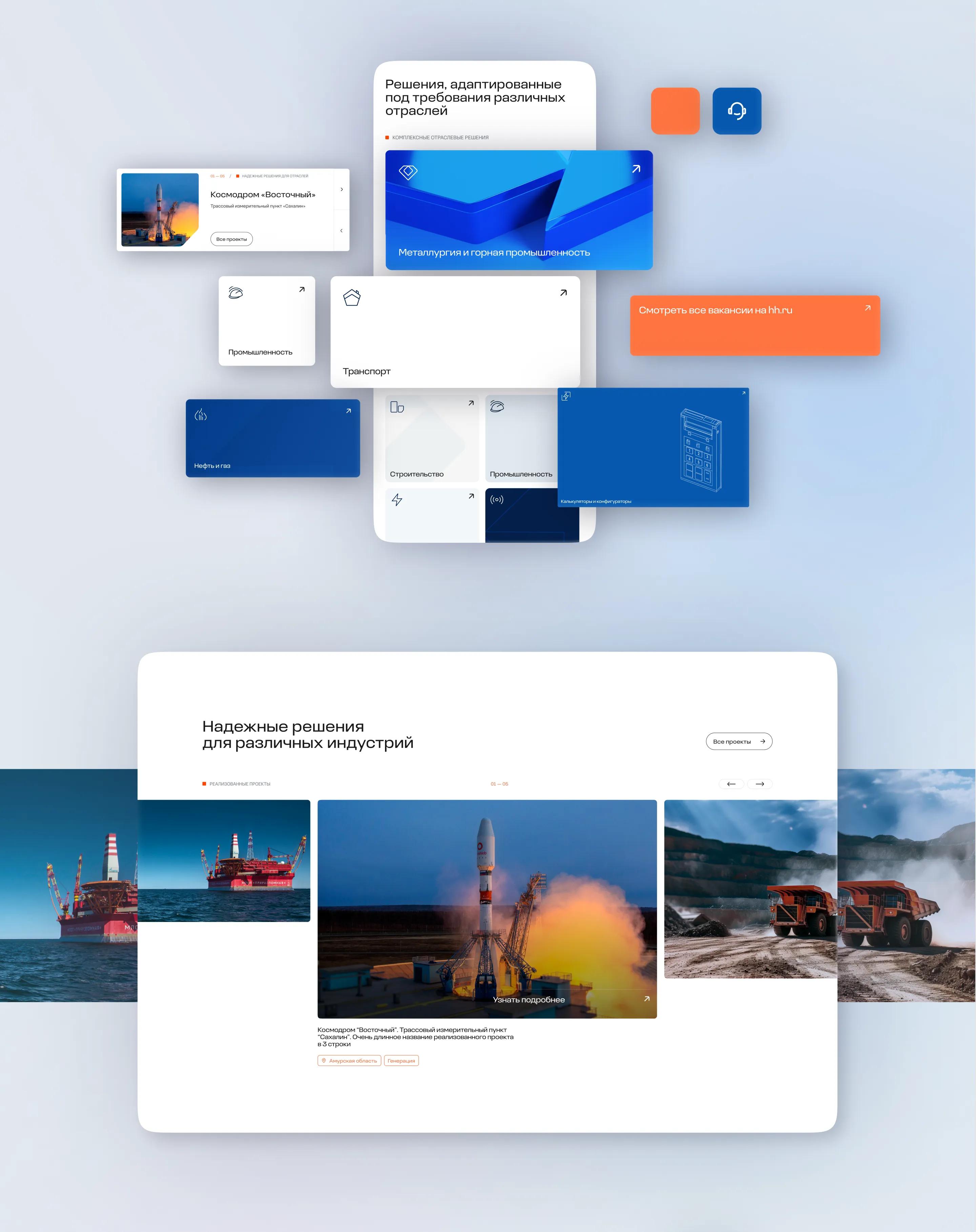
• Reflect the product’s application industries;
• Adapt the new corporate identity for digital;
• Showcase customer services by strengthening the service component;
• Refine the UX and navigation, and restructure the website’s information architecture.
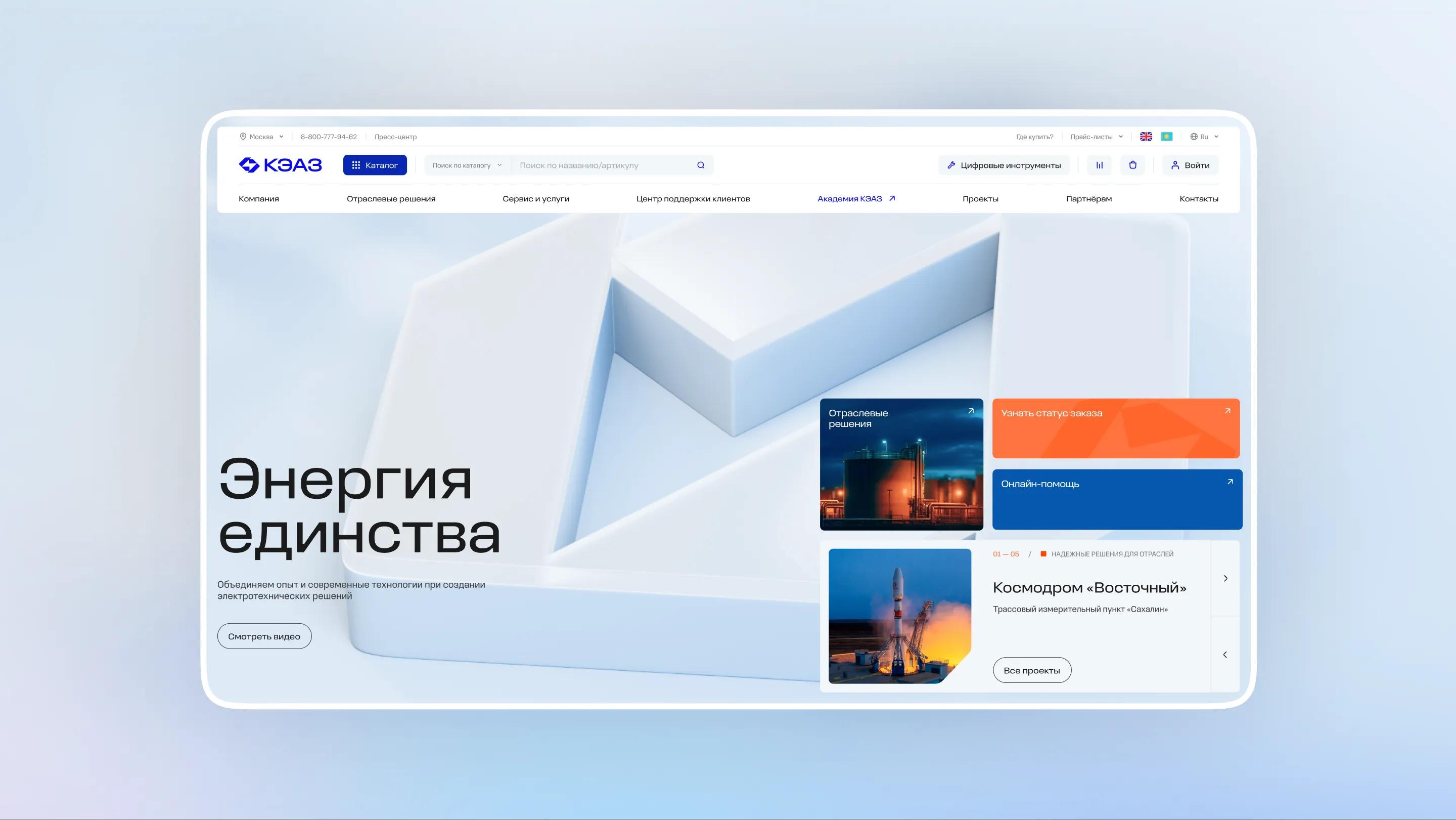
We shifted the company’s positioning toward an industry-specific B2B model and evolved the website from a product showcase into a personalized solutions platform that addresses the needs of diverse audiences. Special attention was given to presenting customer services and improving navigation and the user experience when working with the catalog.
Analytics for designing a next-generation B2B platform
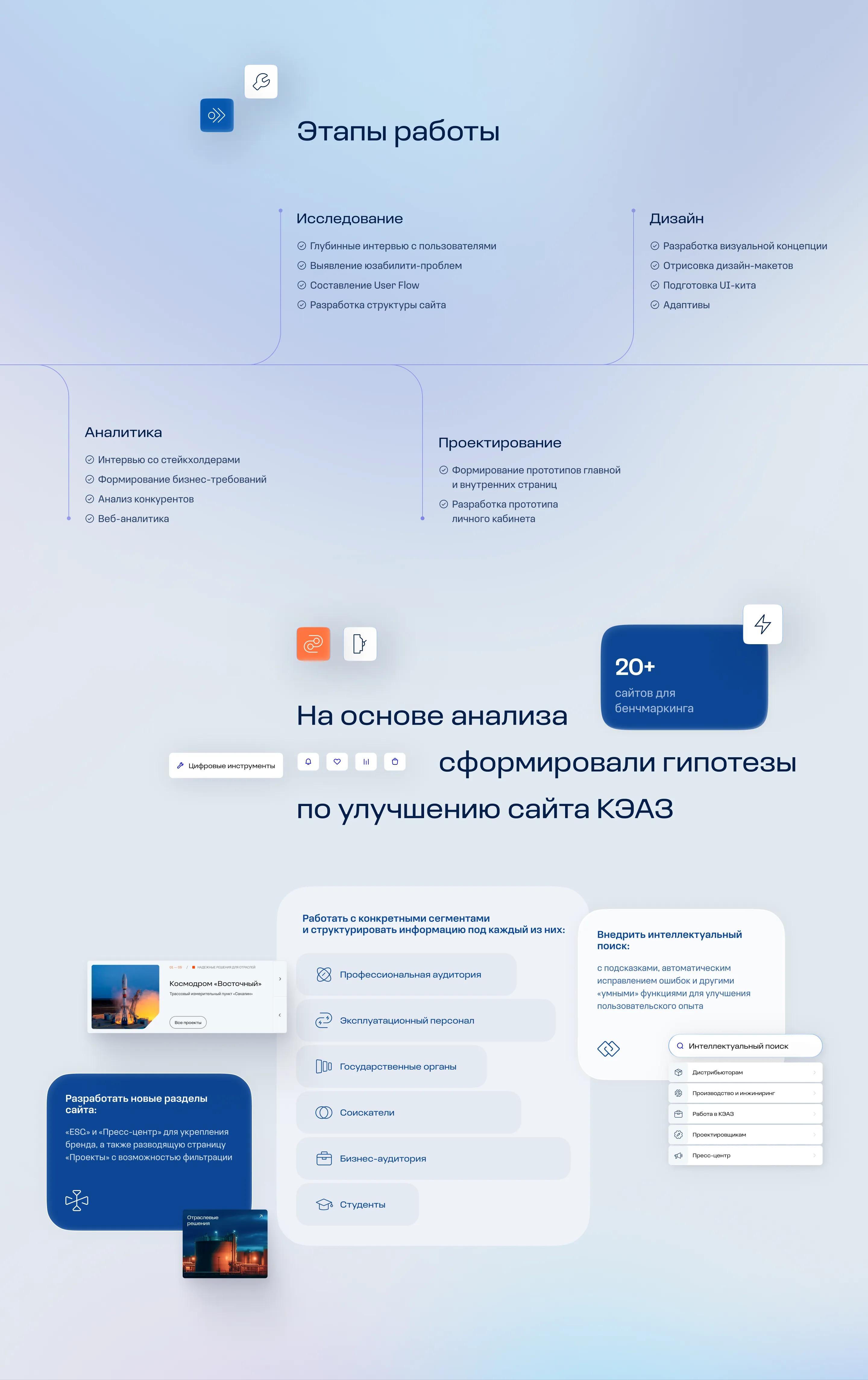
The project began with a multi-stage analysis and an in-depth exploration of the client’s context. An analysis of the old website’s metrics revealed key problem areas: an overloaded home screen, complex filtering, and a low level of personalization. At the same time, we benchmarked dozens of B2B, service, and corporate platforms across various industries, which helped us identify core user patterns and best practices for integration.
Audience Research and Needs Matrix
Based on our hypotheses and the identified issues, we conducted in-depth interviews with six key KEAS stakeholders and five website users. This allowed us to clarify the project context, the website’s target state, the audience’s characteristics, and their needs.
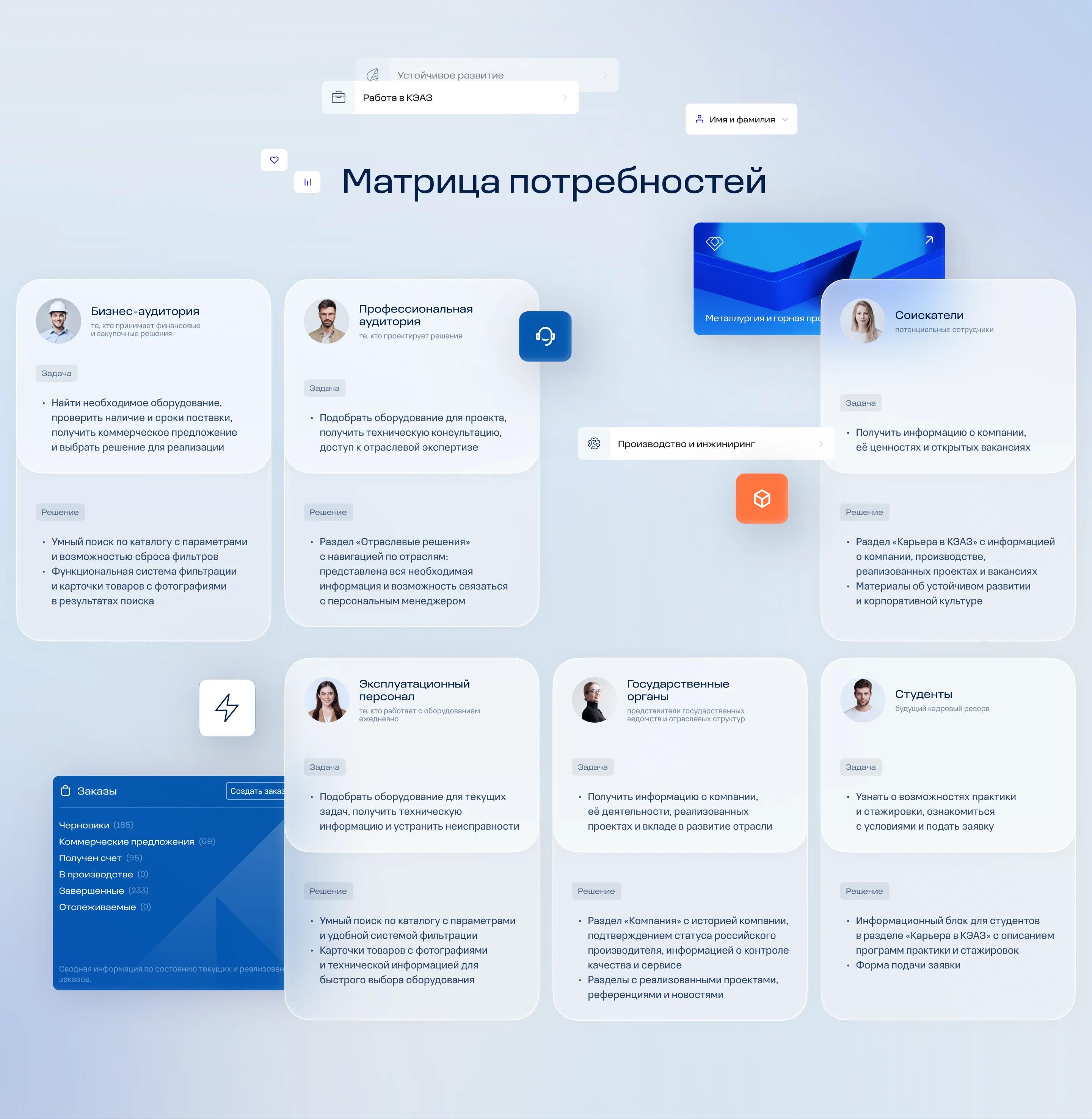
The platform serves multiple audiences simultaneously, so we created a needs matrix for key segments with unique interface and scenario requirements, including goals, pain points, needs, and a set of key actions. It served as the foundation for personalized design of the structure and navigation and allowed us to identify the main content sections that should be featured on the site.
Structure, User Flow, and Functional Architecture
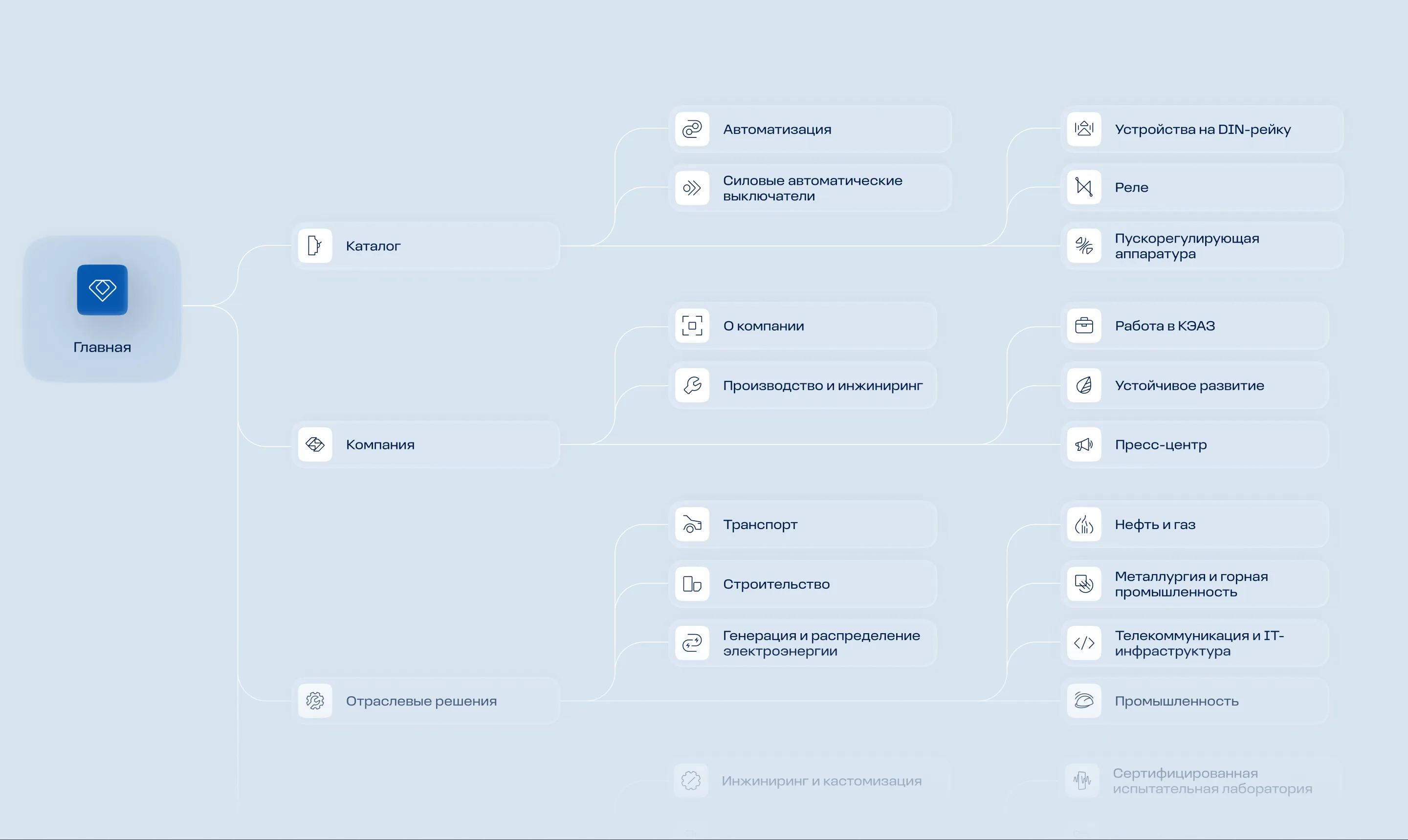
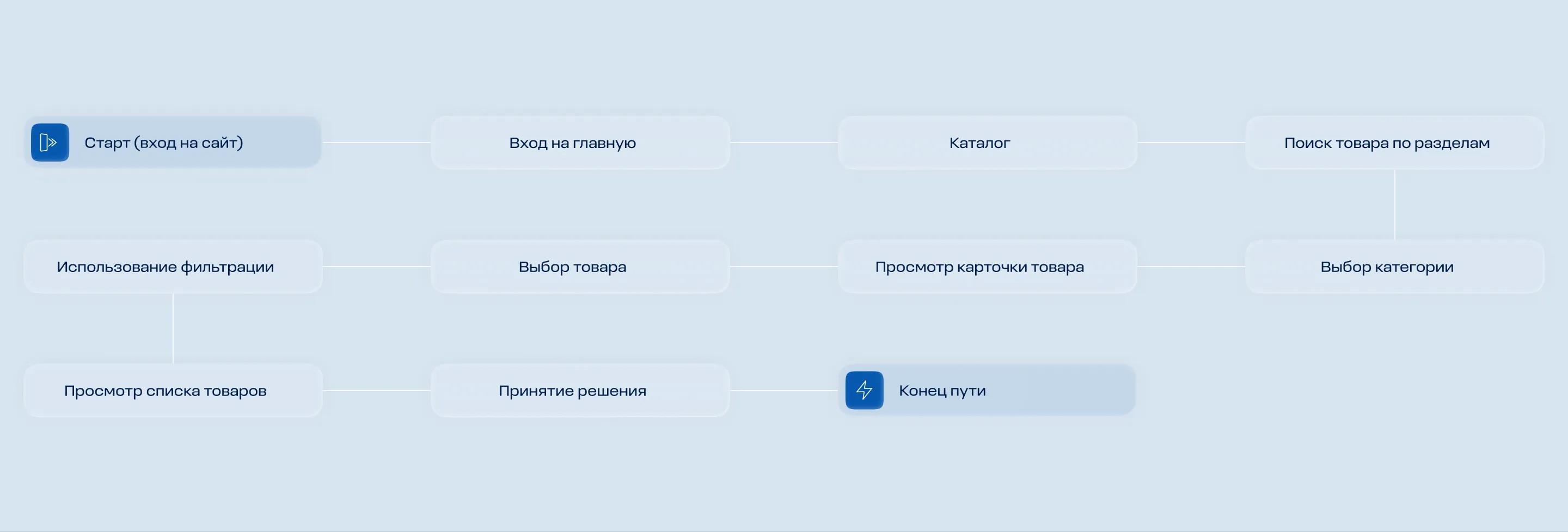
Based on analytics and a needs matrix, we developed hypotheses for the site structure and key user flows for all segments, taking into account real-world user scenarios, business priorities, and the functional roles of each page. The structure aligns with the behavior of different audiences, eliminates duplication, and establishes a logical content hierarchy.
The website combines service sections—calculators and configurators—with commercial and brand-building sections so that each audience can quickly find information, use tools, and make purchases.
Prototyping
We created prototypes for over 100 pages, including catalogs, product cards, and corporate sections. The homepage, internal pages, and user dashboard underwent usability testing, which allowed us to refine the interface and adjust the UX logic.
The design process took into account the multifaceted target audience and the client’s business requirements. Well-thought-out login scenarios and action sequences eliminate unnecessary steps. Each element was discussed with the client’s team and aligned with analytics and research findings.
Engineering Design
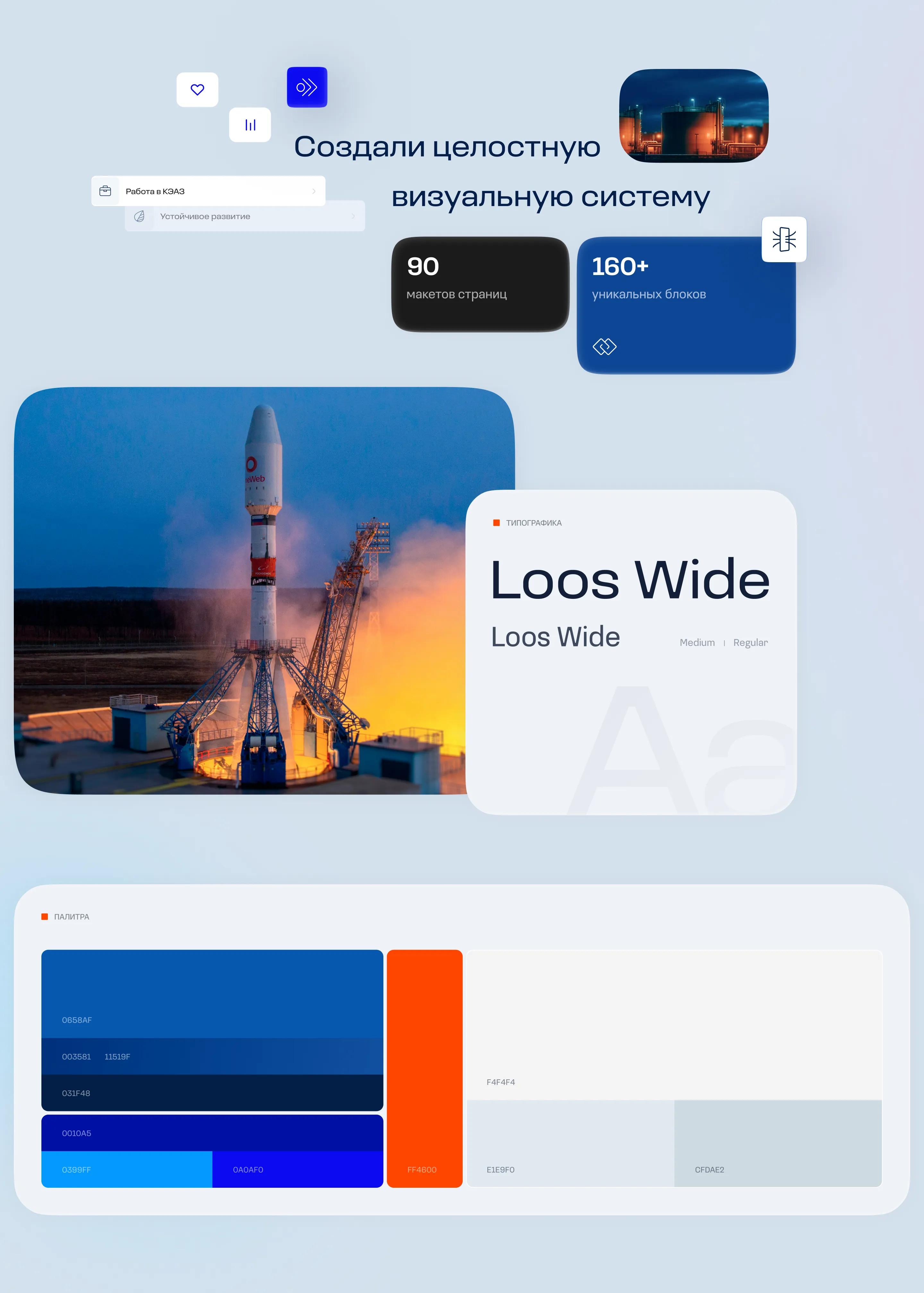
The corporate identity and brand attributes were adapted and developed into new elements of the digital identity, consistent with the company’s overall style
The concept is built on a balance of visual expressiveness and functionality. Moderate dynamics and an «airy» feel ensure a logical perception of the content, emphasize technological sophistication and reliability in line with the company’s values and mission, and meet the request to create a website «that previously could not have been imagined in the web space.»
The typography combines technical precision with a human touch, ensuring high readability and visual clarity of the interfaces. Widgets and graphic placeholders for banners, videos, and service blocks form a unified visual «common thread» throughout the project.
In this way, we have struck a balance between usability and visual expressiveness.
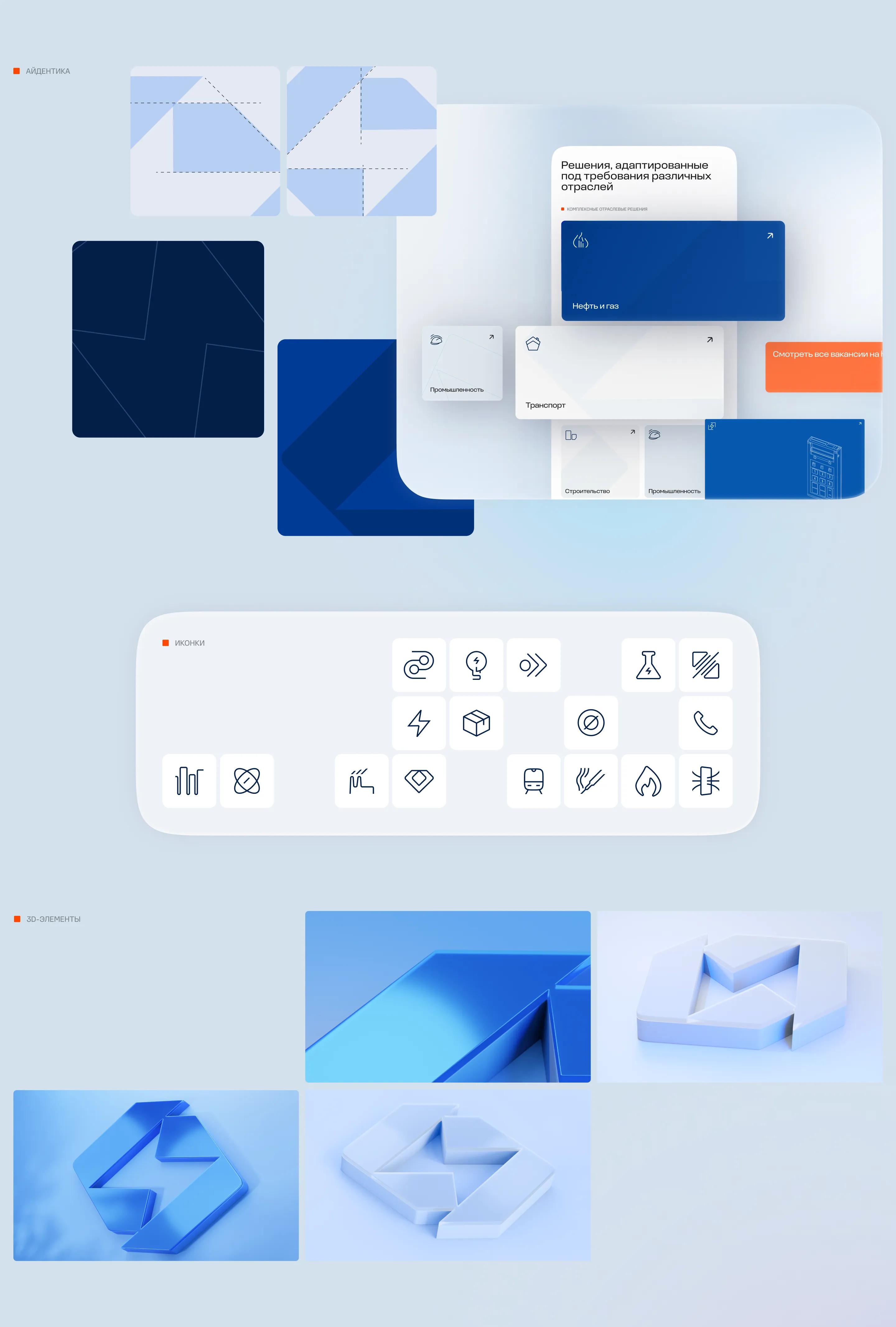
Identity
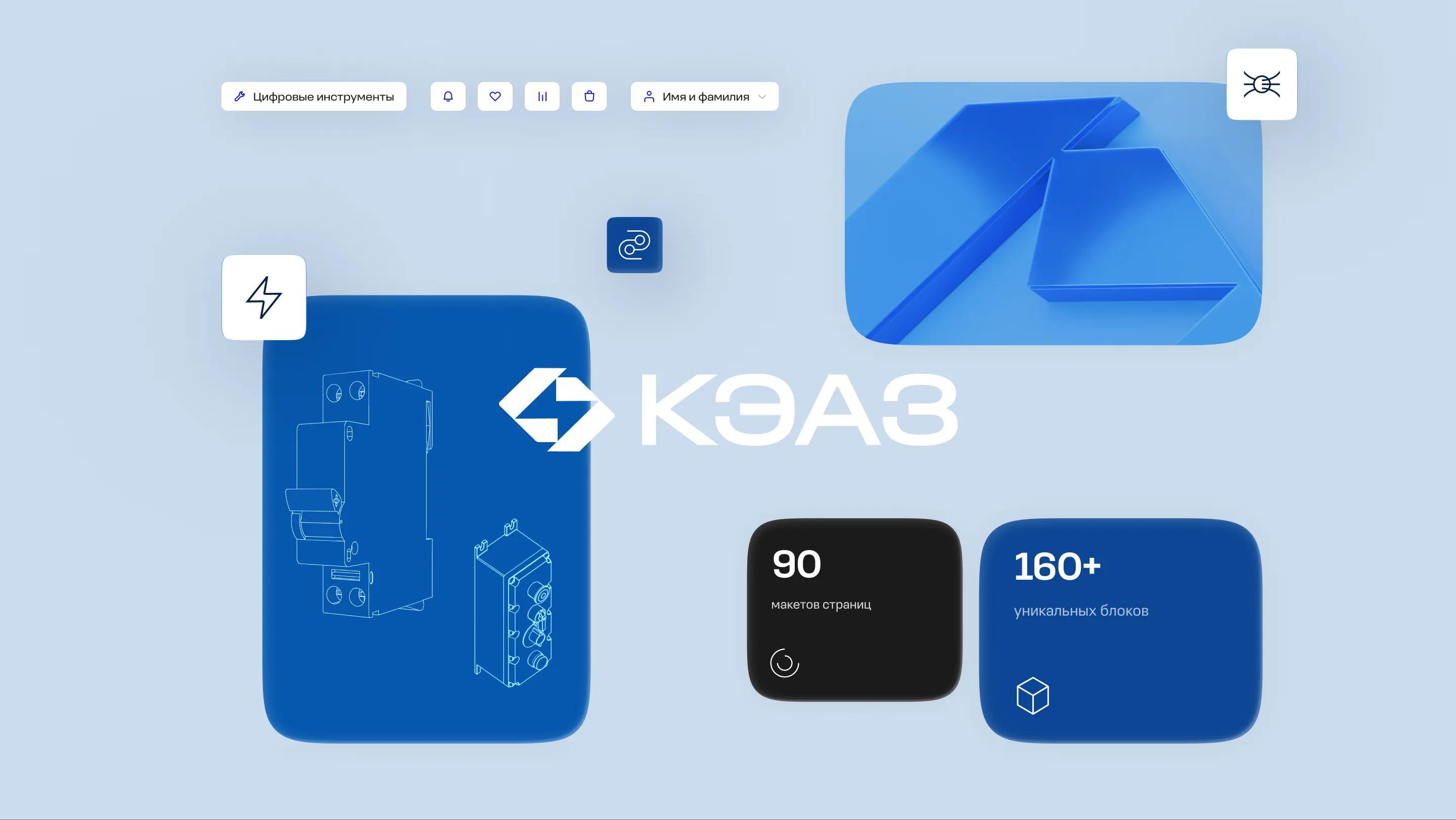
Based on the logo’s negative space, we created linear graphics that can be used as backgrounds for covers, cards, and banners, establishing visual continuity and a hierarchy of perception. The system of custom icons includes reworked images and unique product outlines. We added 3D elements to convey a sense of technological sophistication.
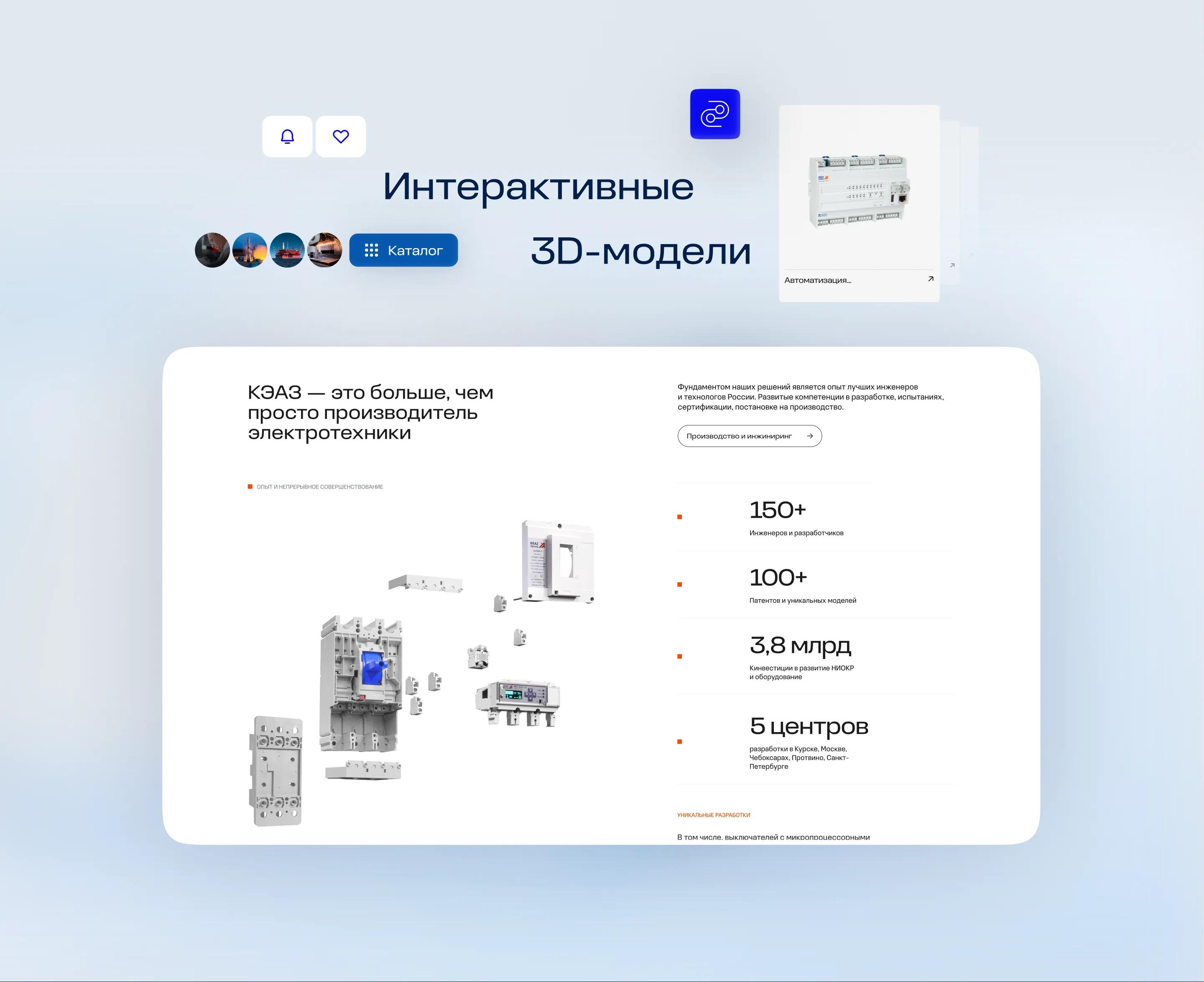
Focus on the product
We refined the visual style and infographics and integrated them into the interface so that the products remain the focal point, while the interface remains informative and user-friendly.
Professional images of the equipment were manually edited, including color correction and adjustments to textures and lighting.
Calculators, configurators, and specialized service pages have become essential tools for engineers, technologists, and installers, while step-by-step guides, technical diagrams, charts, and a chatbot cater to their professional needs.
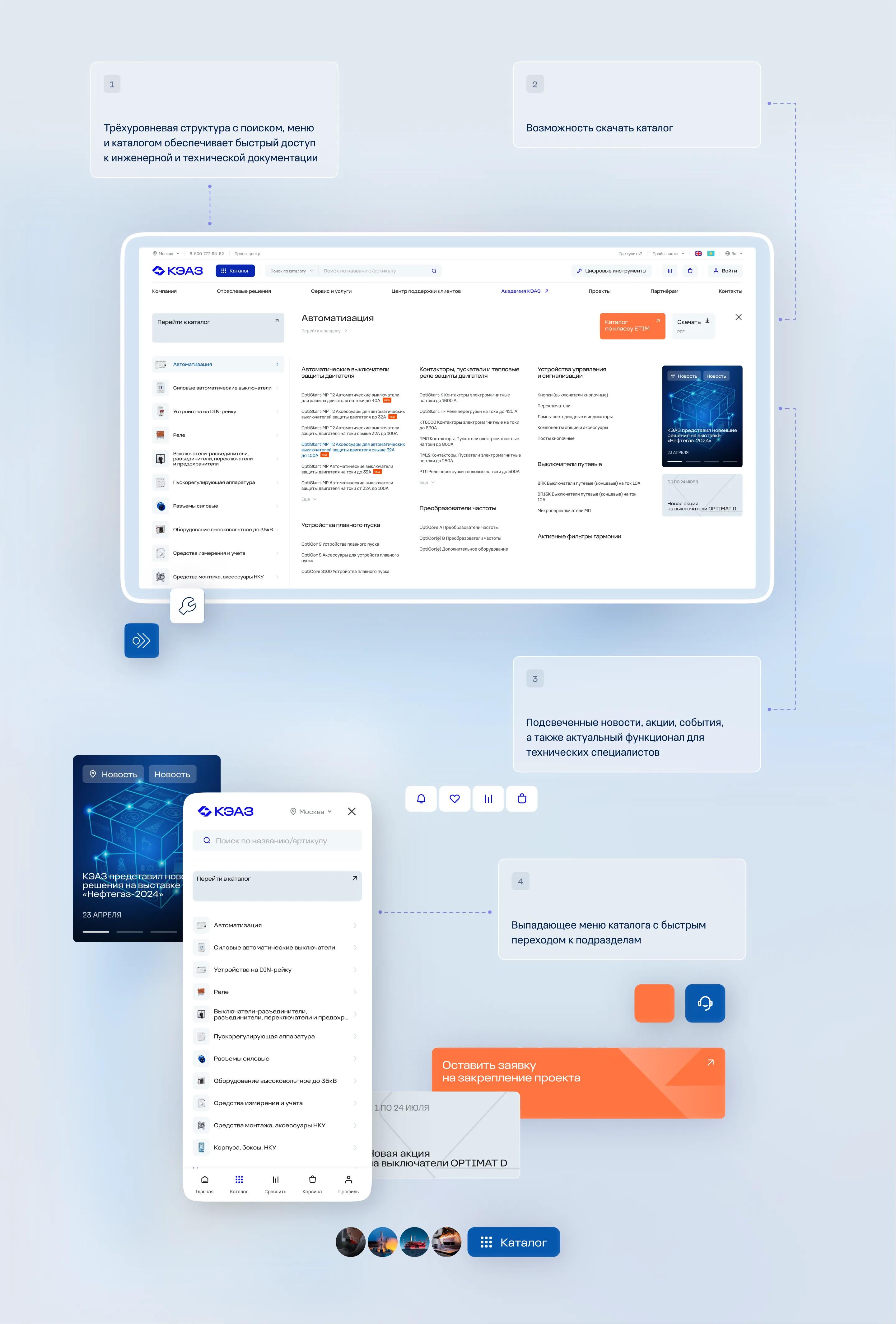
Menu and Navigation
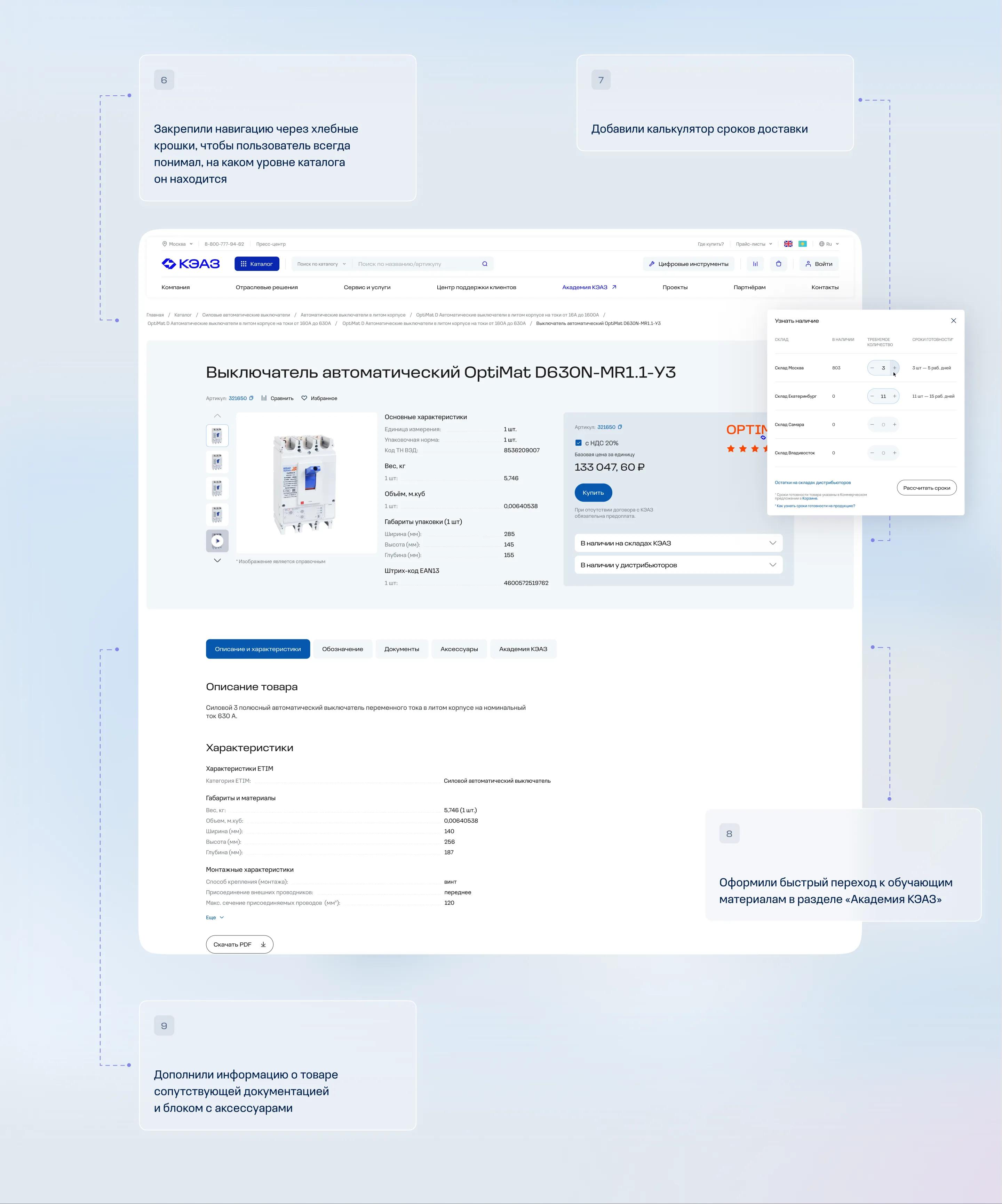
We assumed that the top mega menu and the side menu simplify navigation, while the breadcrumbs on the internal pages help users find their way around.
Home Page
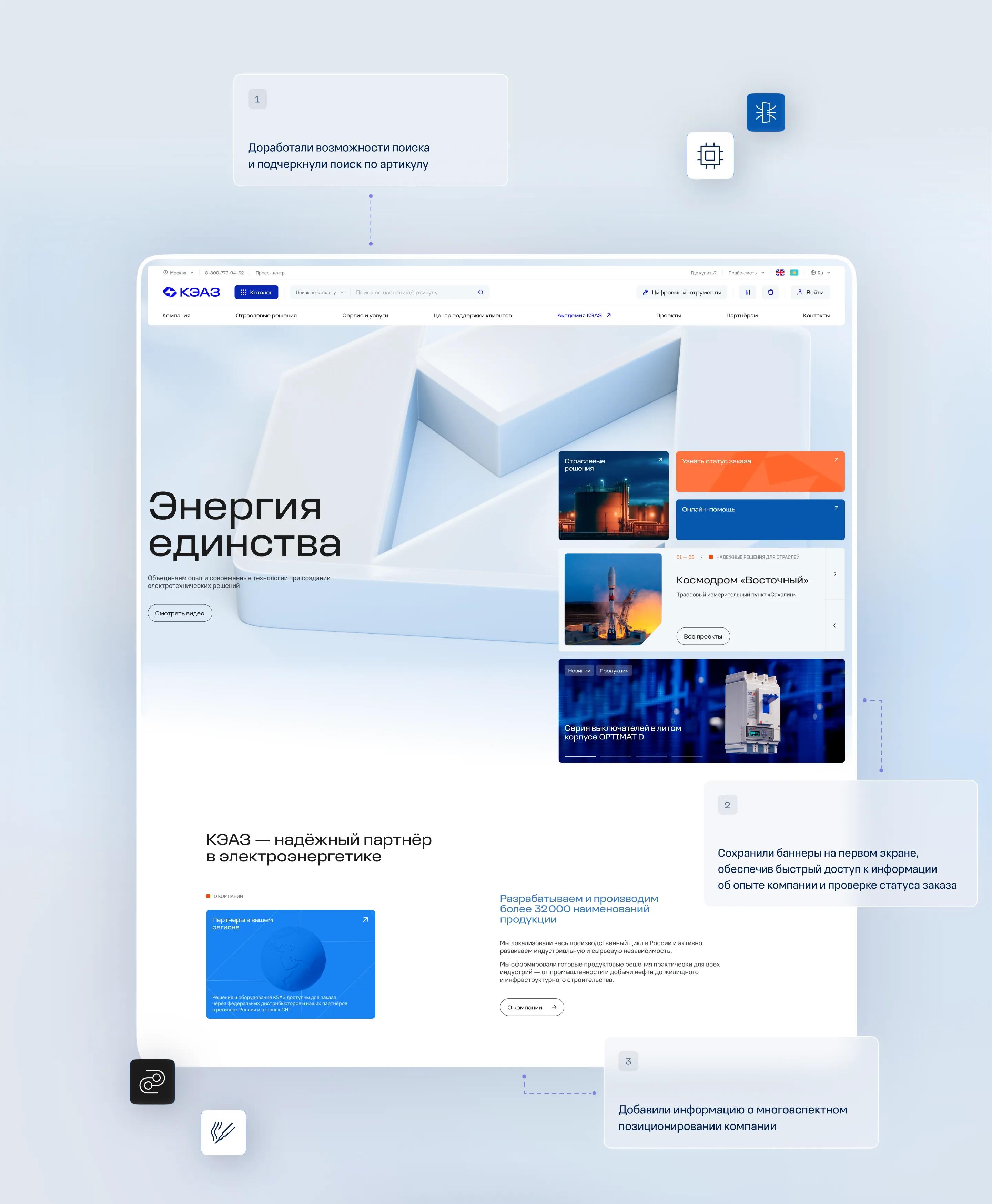
The analysis showed that users actively use the site search and the banner on the home page, but pay little attention to the sections containing company information. We kept the banners with up-to-date information on the home page, while enhancing the functionality and expanding the search capabilities.
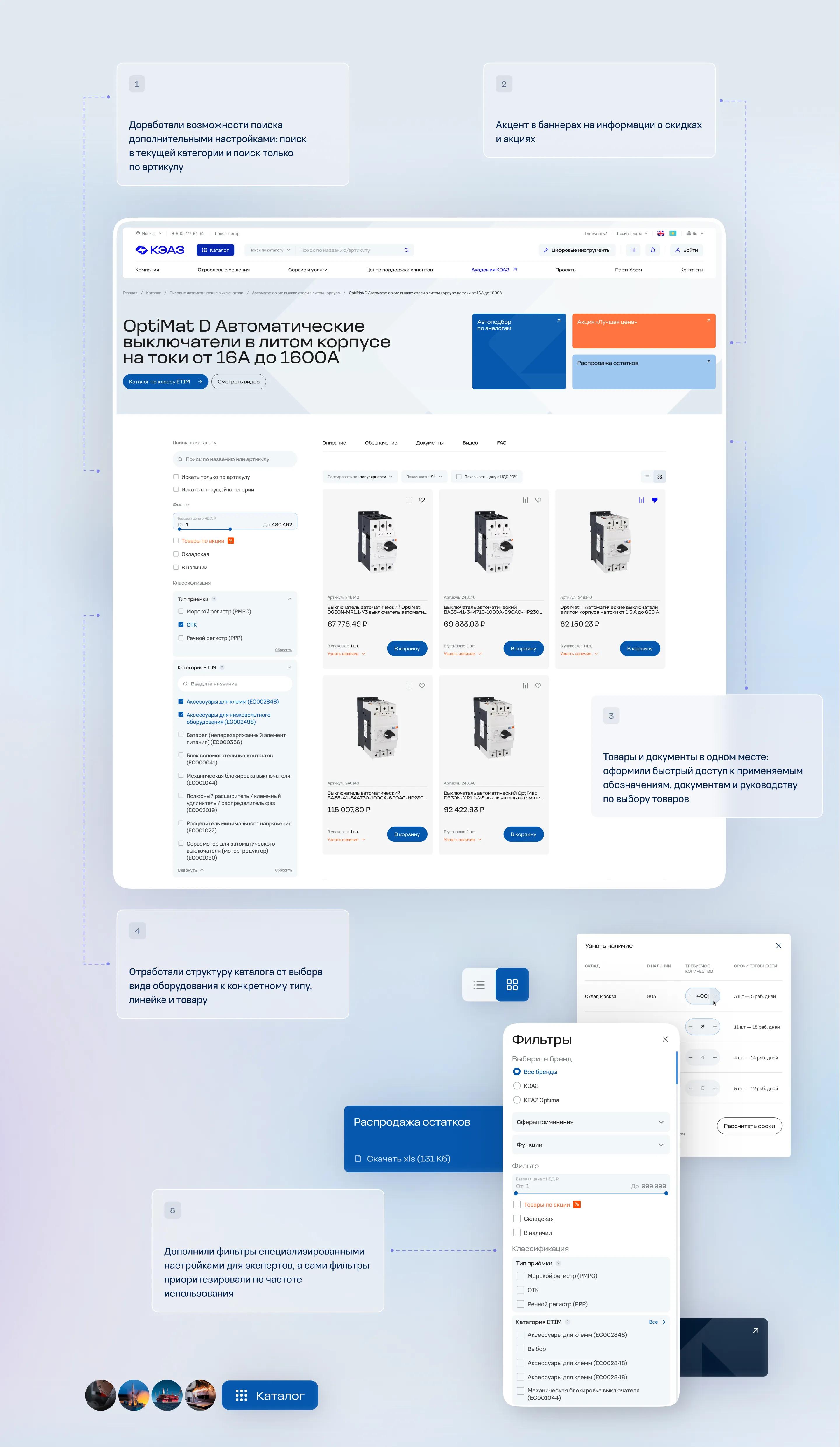
Catalog
Users were divided into those who searched for products by name and those who searched by SKU, and not everyone found the catalog structure intuitive.
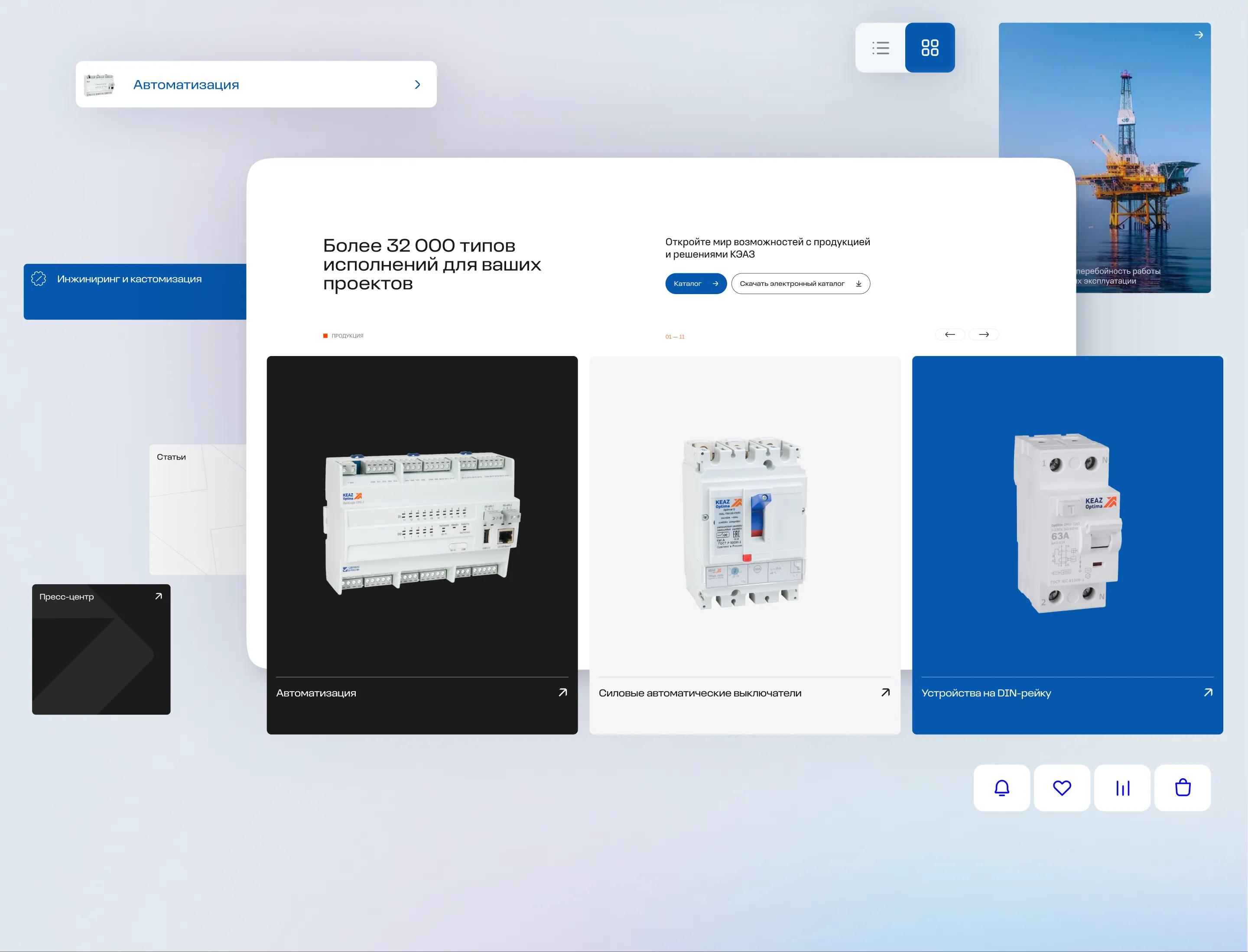
We focused on search as the section’s key feature. To achieve this, we built category navigation in the form of a tree structure and redesigned the product cards, emphasizing key information and highlighting the ability to filter by new arrivals.
Multi-level filtering takes into account interrelated parameters and is adapted for clarity and convenience for different audience segments.
UI kit and handoff to development
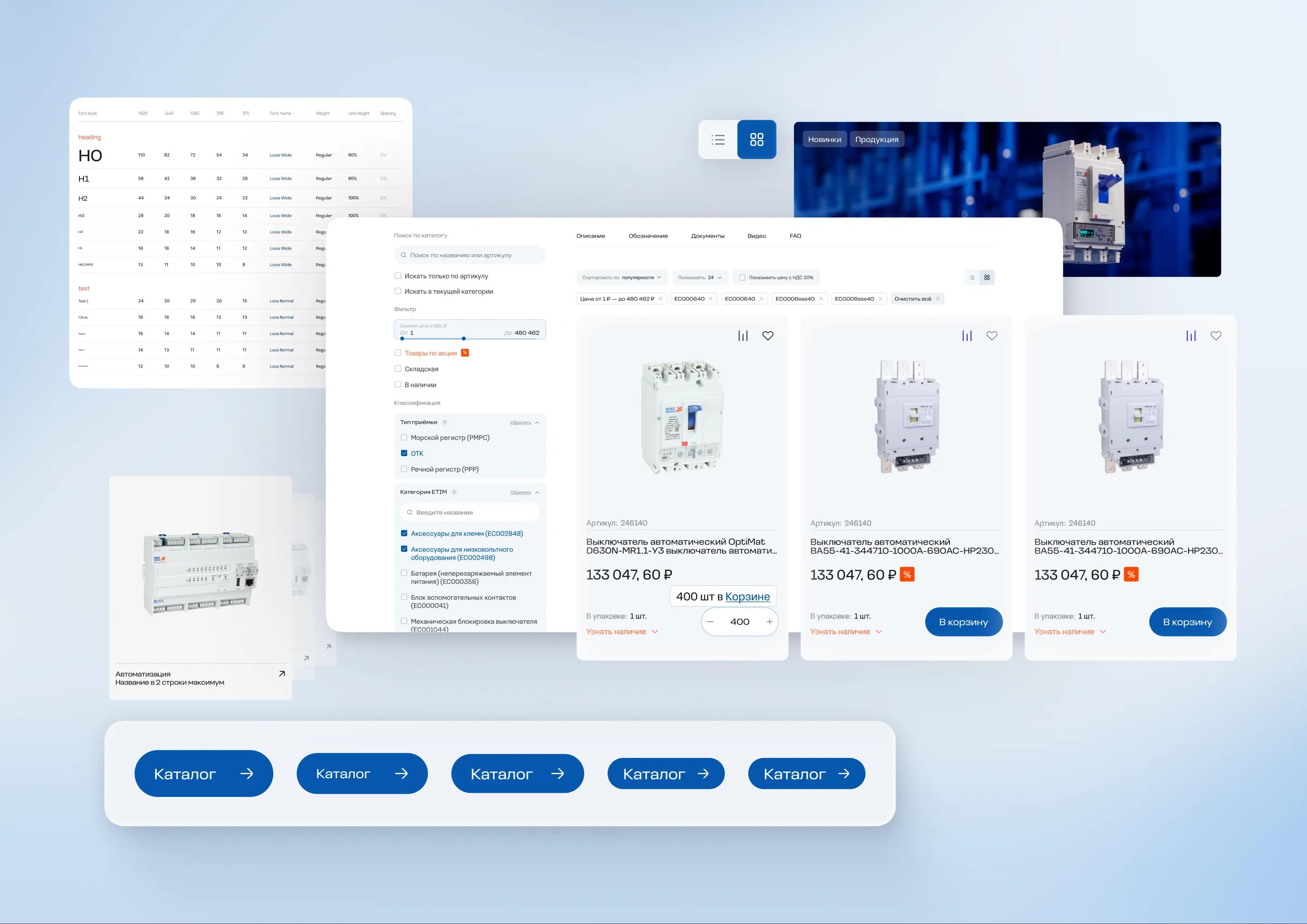
We developed a comprehensive UI kit featuring responsive layouts, a standard block structure, animation guidelines, and detailed comments for external development. It ensures the consistency, reproducibility, and scalability of the interface, minimizing the risk of errors during the layout phase.
Result
We have reimagined the B2B e-commerce platform, transforming it into a modern digital platform built on data, real-world product usage scenarios, and design best practices, with a focus on experience, convenience, and personalization.
By shifting the focus from individual products to comprehensive solutions, the platform reflects the company’s scale, unifies business lines, and provides functionality for different audience segments.
The updated catalog structure and industry-specific approach have reduced information search times, increased page depth, and boosted repeat visits and user engagement. The platform has become a working tool: it brings together expertise, services, and professional features, combines commercial and branding goals, and maintains a harmonious balance between usability and visual aesthetics.