Döcke Tavola: Website for a New Flooring Brand
Full-cycle development of a brand showcase website for the new flooring brand Döcke Tavola
Full-cycle development of a brand showcase website for the new flooring brand Döcke Tavola
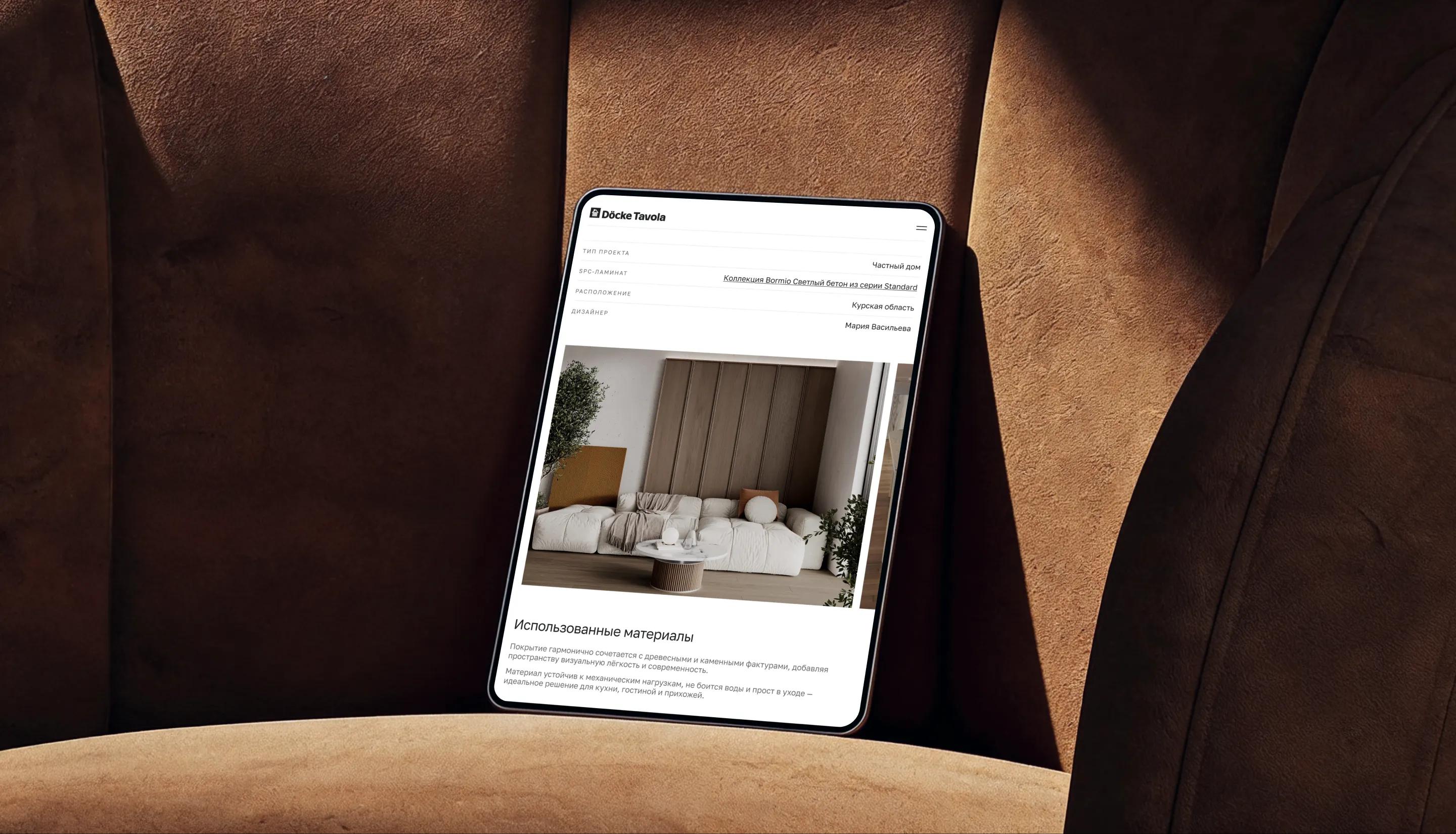
To expand the product line and solidify its positioning in the interior design market, a brand website with a catalog was needed — a tool for presenting the product range, shaping the brand image, and supporting the purchasing journeys of retail customers and professional partners.
Context and Objective
Our task was to create a digital platform to launch the sub-brand into the market. The website addresses four key areas:
• Positioning — establishing Tavola’s image in the SPC niche in the Russian and CIS markets, serving as a landing page for branded traffic;
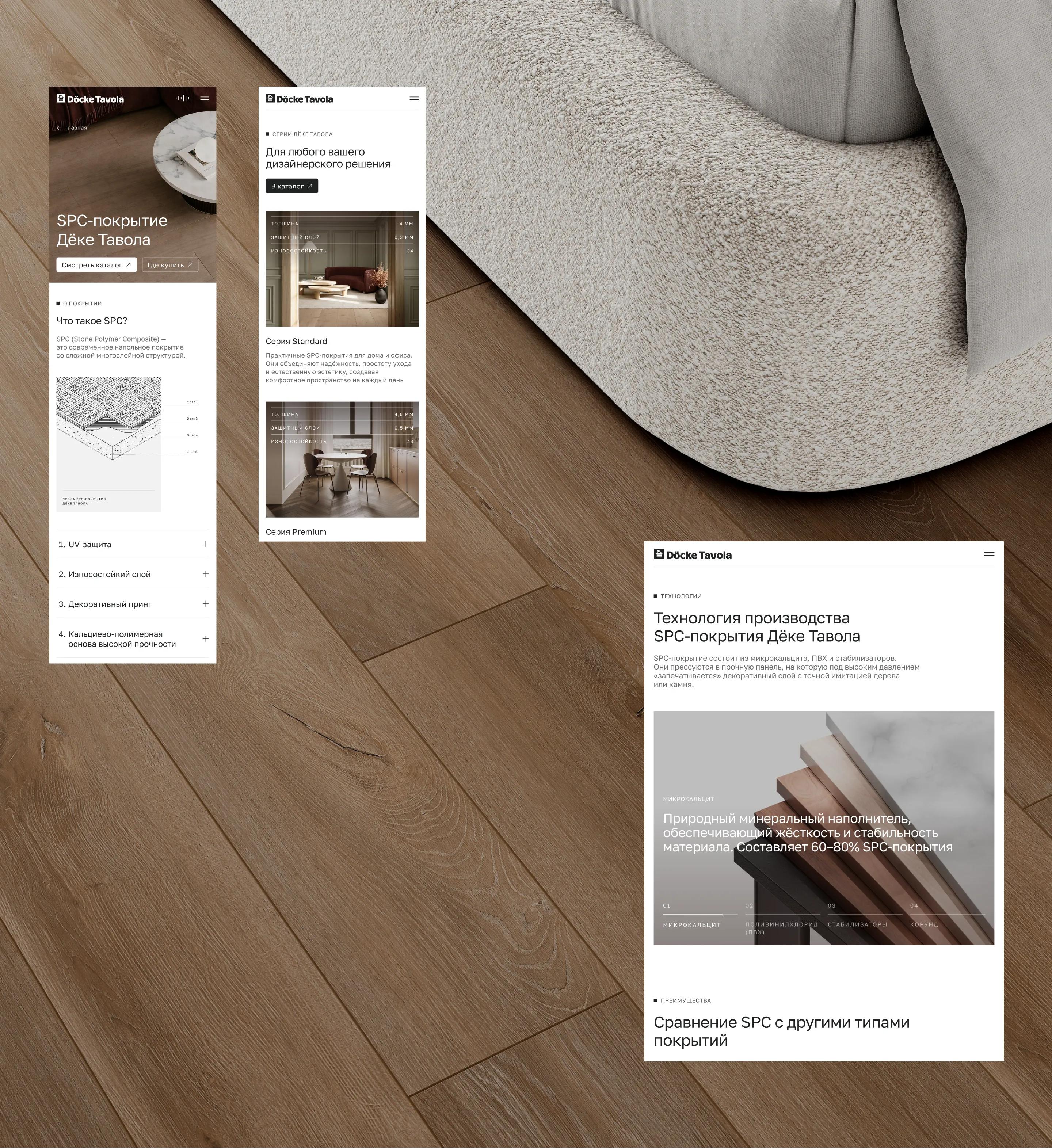
• Visual presentation — a minimalist design that conveys the brand’s technological value and atmosphere;
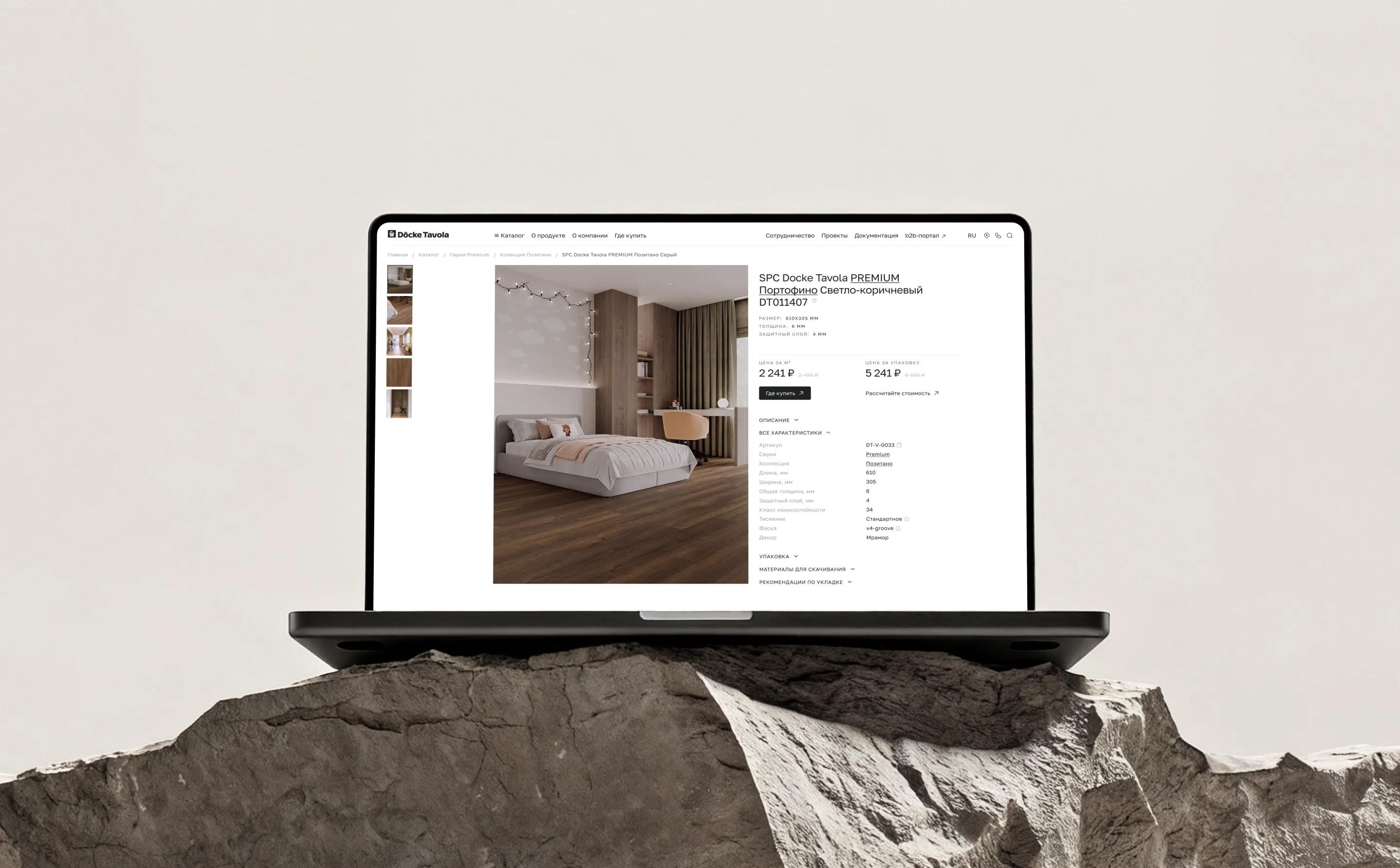
• Catalog and navigation — an intuitive structure with filters and detailed product cards that clearly display the characteristics and benefits of the materials;
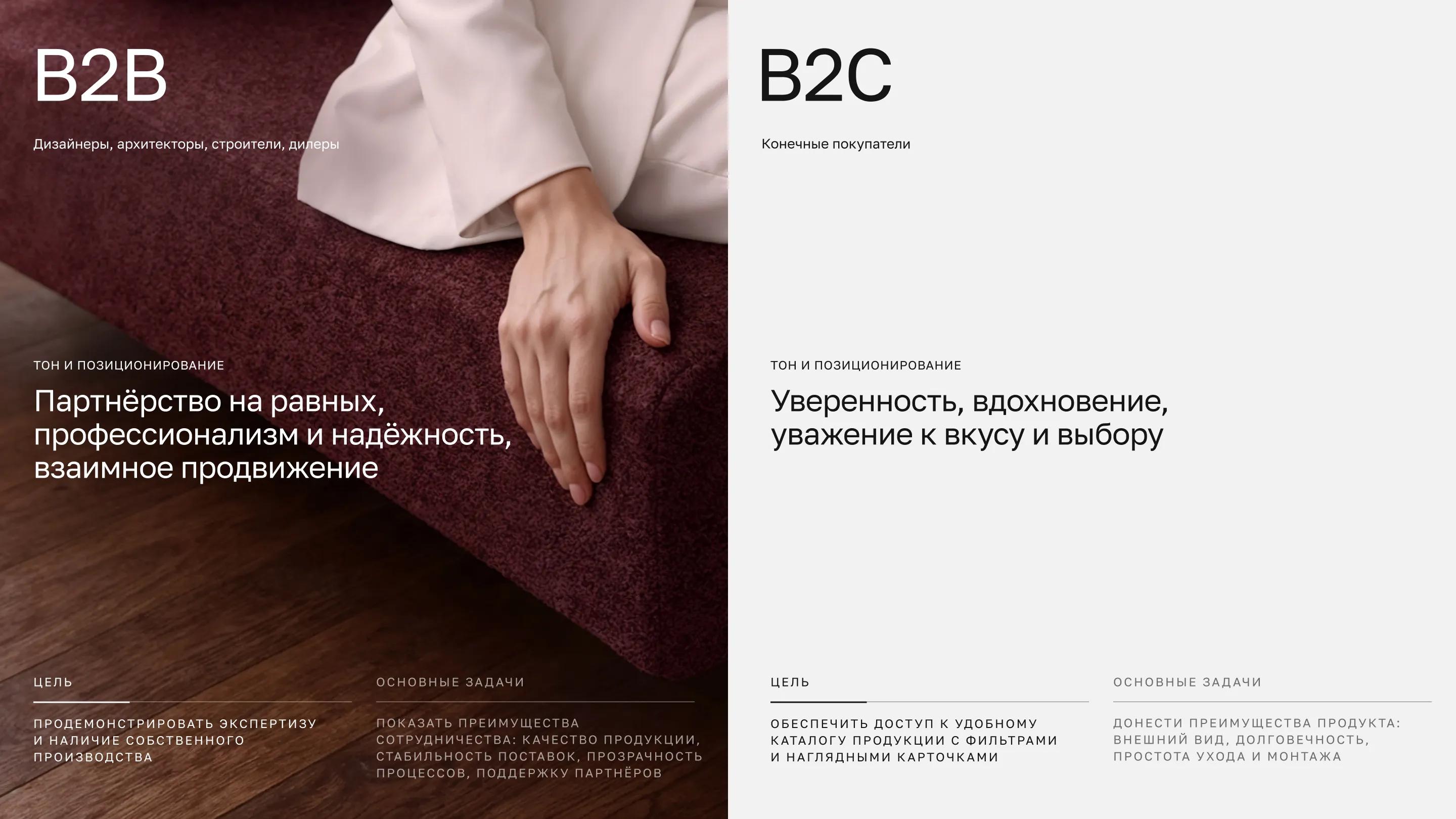
• Scenario segmentation — separating B2C and B2B pathways with a unified logic: from exploring the collection to placing an order through the dealer network.
The architecture must be designed with scalability in mind—allowing for the addition of regions, external integrations, series, and products—without requiring a core rebuild.
Translated with DeepL.com (free version)
Analytics and Design
The research began with interviews with stakeholders and interior designers, competitive benchmarking, and an analysis of the semantic core. This made it possible to identify systemic errors in the user journey and verify the needs of key segments.
The scenarios were designed to meet the audience’s needs:
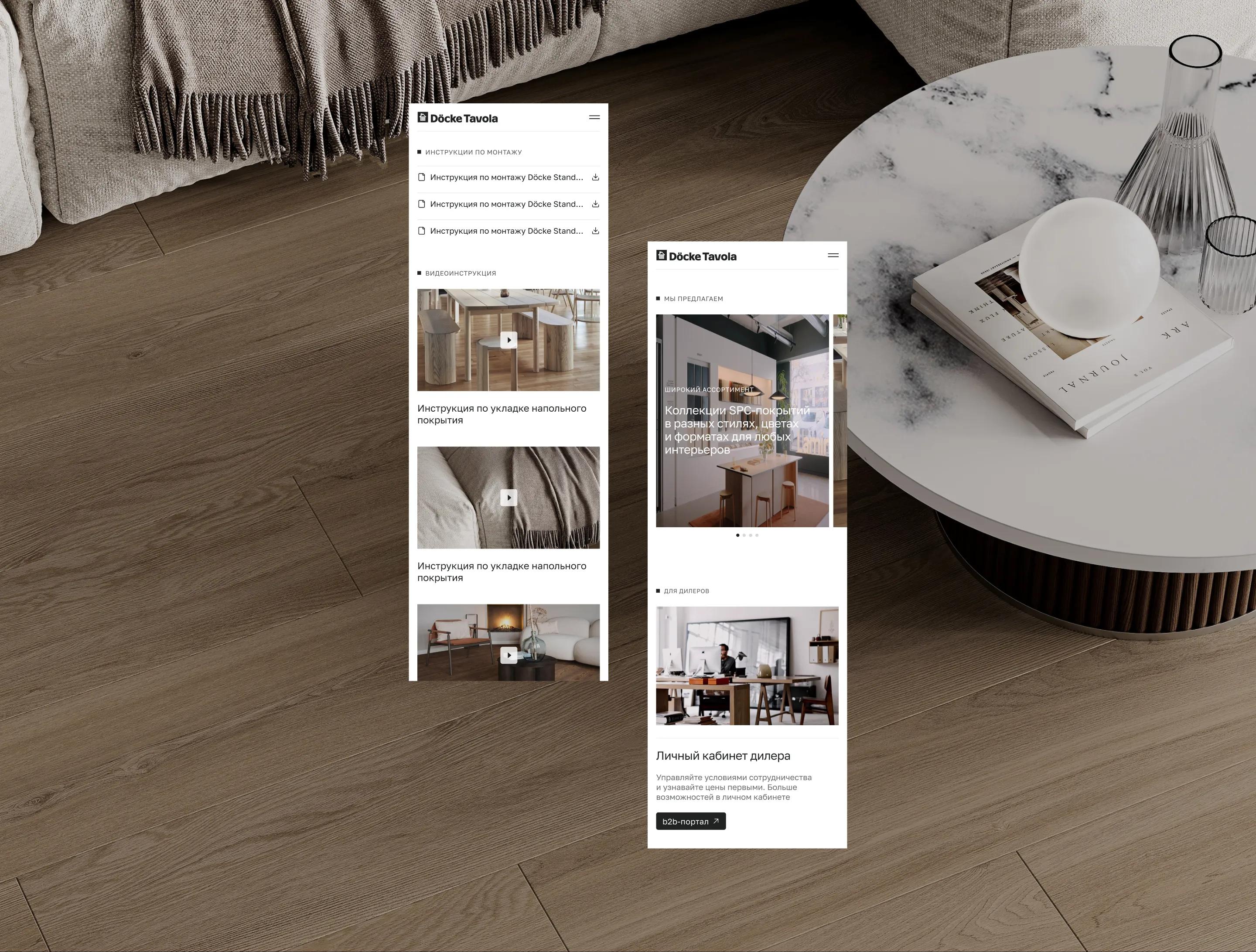
• B2B — access to 3D materials, technical documentation, terms of cooperation, a personal account, and an application form;
• B2C — visual product selection, confirmation of product specifications, search for points of sale, and transparent warranty terms.
Common requirements for all segments include brand trust, an intuitive catalog, confirmation of product durability, and quick access to documentation.
These insights formed the basis of the information architecture and SEO model. We also prepared technical requirements for content and development based on current ranking factors, and established rules for URL formation, navigation logic, navigation structure, and meta attributes.
Structure and UX
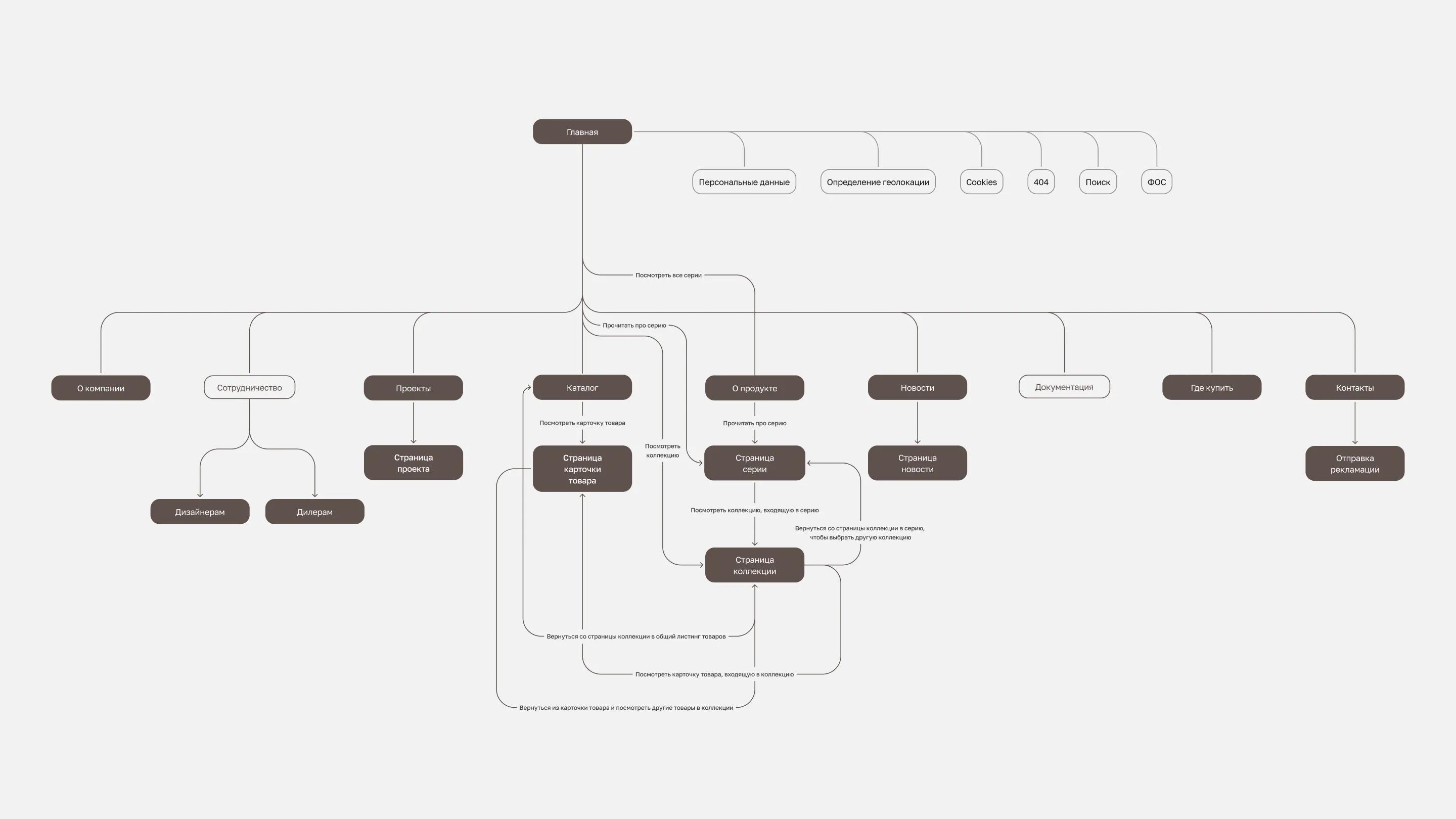
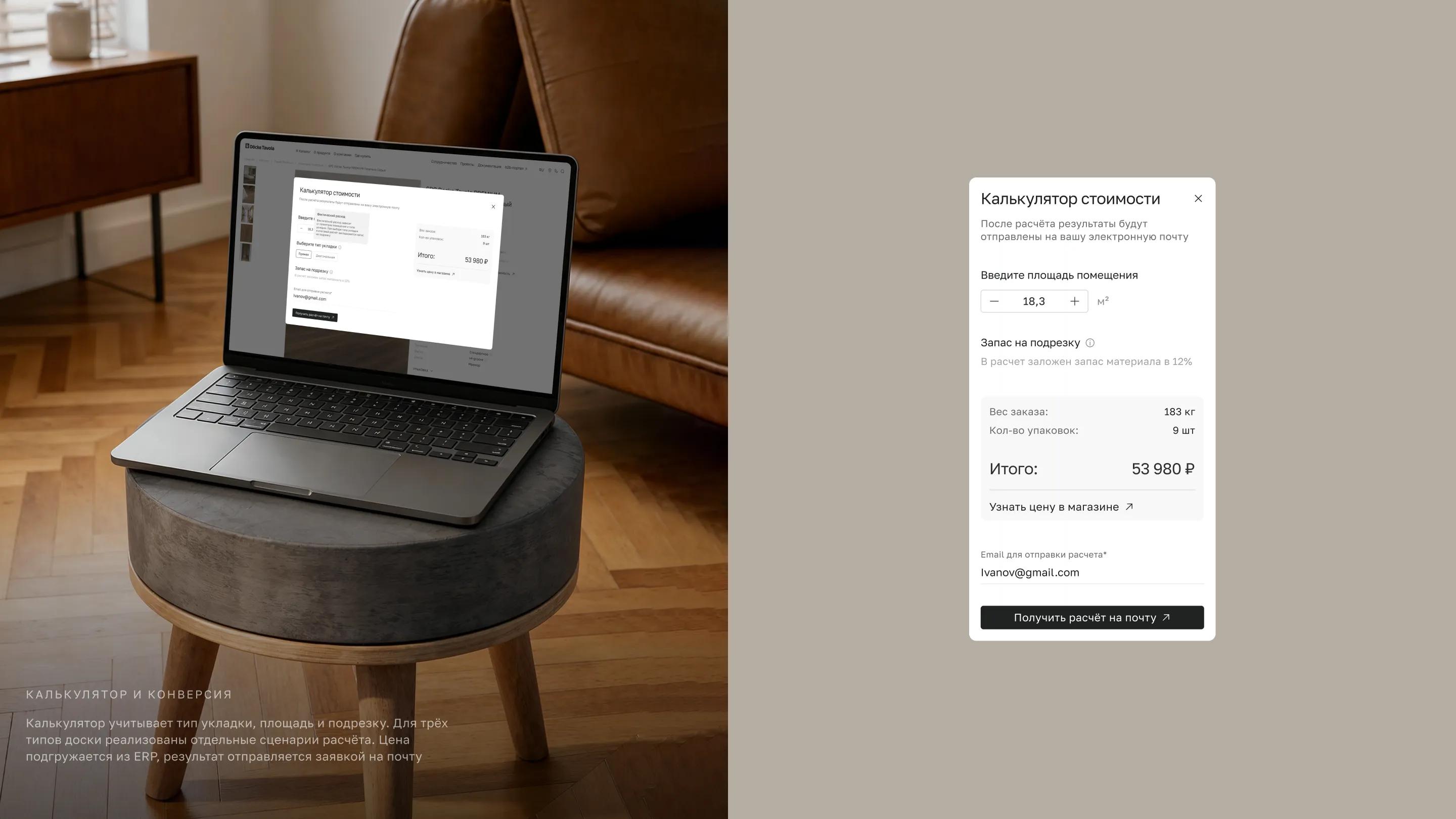
The information architecture is based on a scalable “series × collection × product” structure. The user journey is structured linearly: from getting to know the brand to exploring the product range, selecting a product, and finding retail locations. A visual selection scenario with filtering has been implemented, culminating in a calculator and a transition to the “Where to Buy” section.
As a result of the design work, 19 unique pages and over 40 interface blocks were created, including:
• collection landing pages and series pages with product specifications;
•
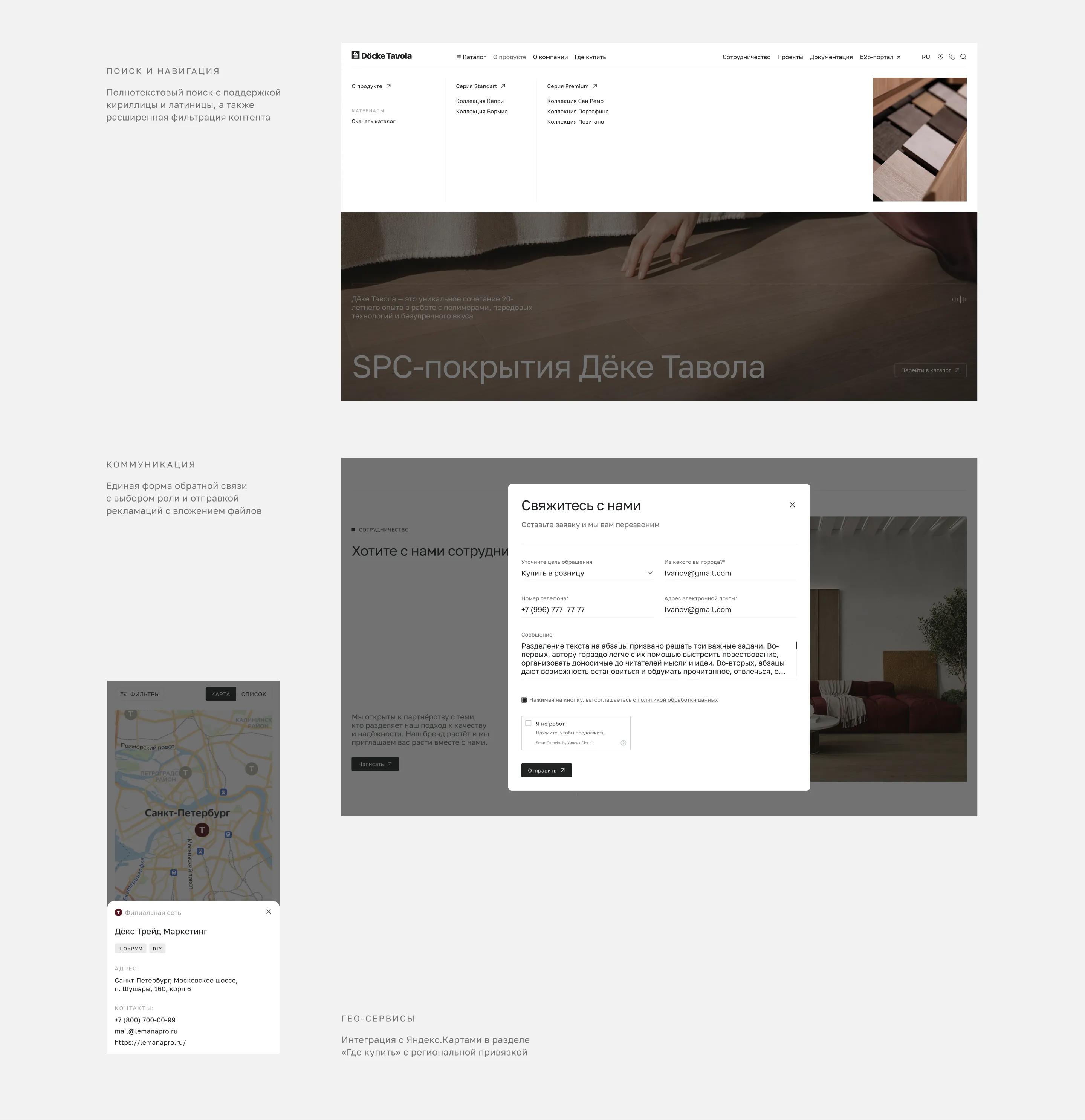
• the “Where to Buy” section with regional filtering and separate pages for partners.
Design and Visual Identity System
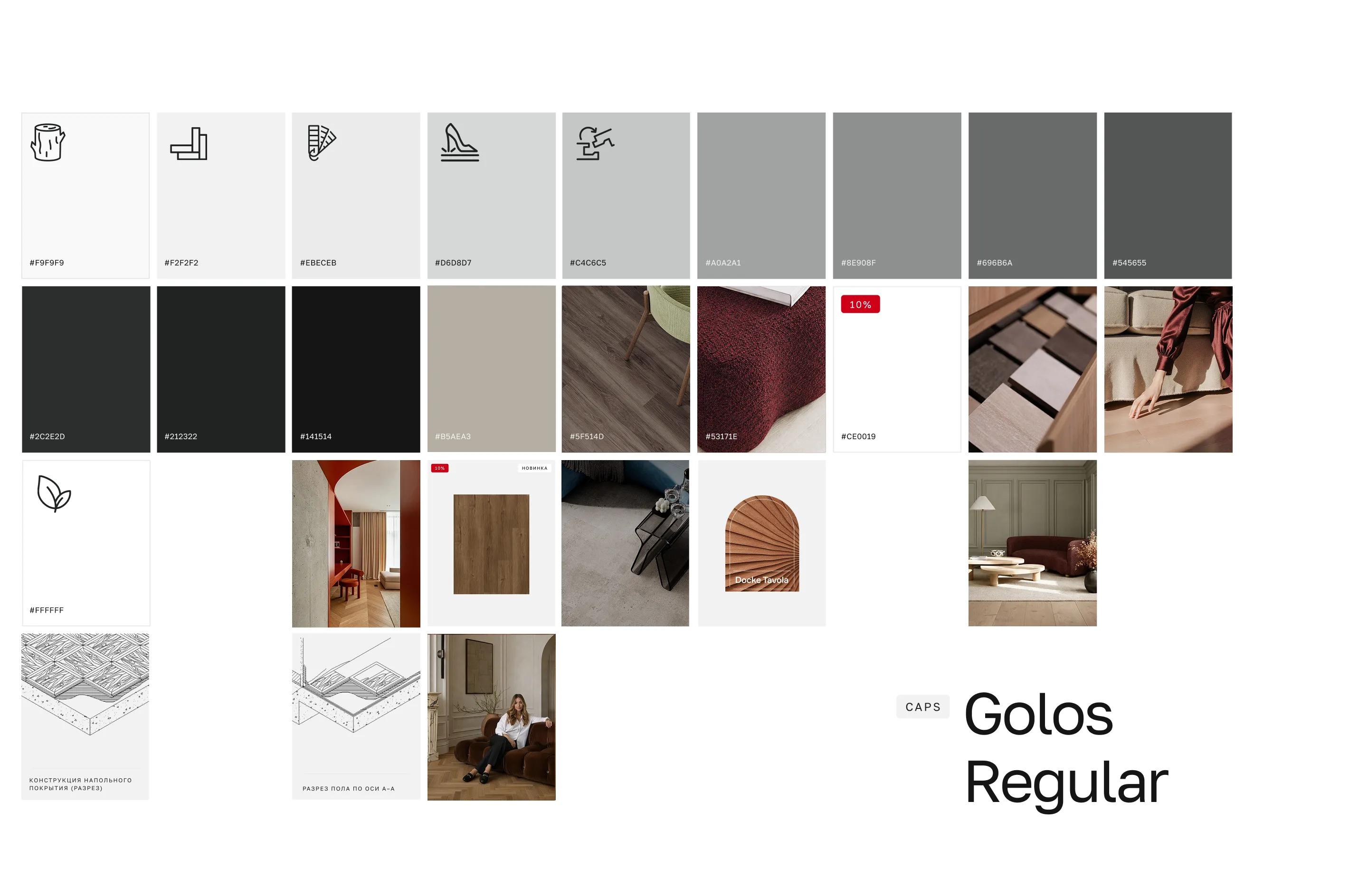
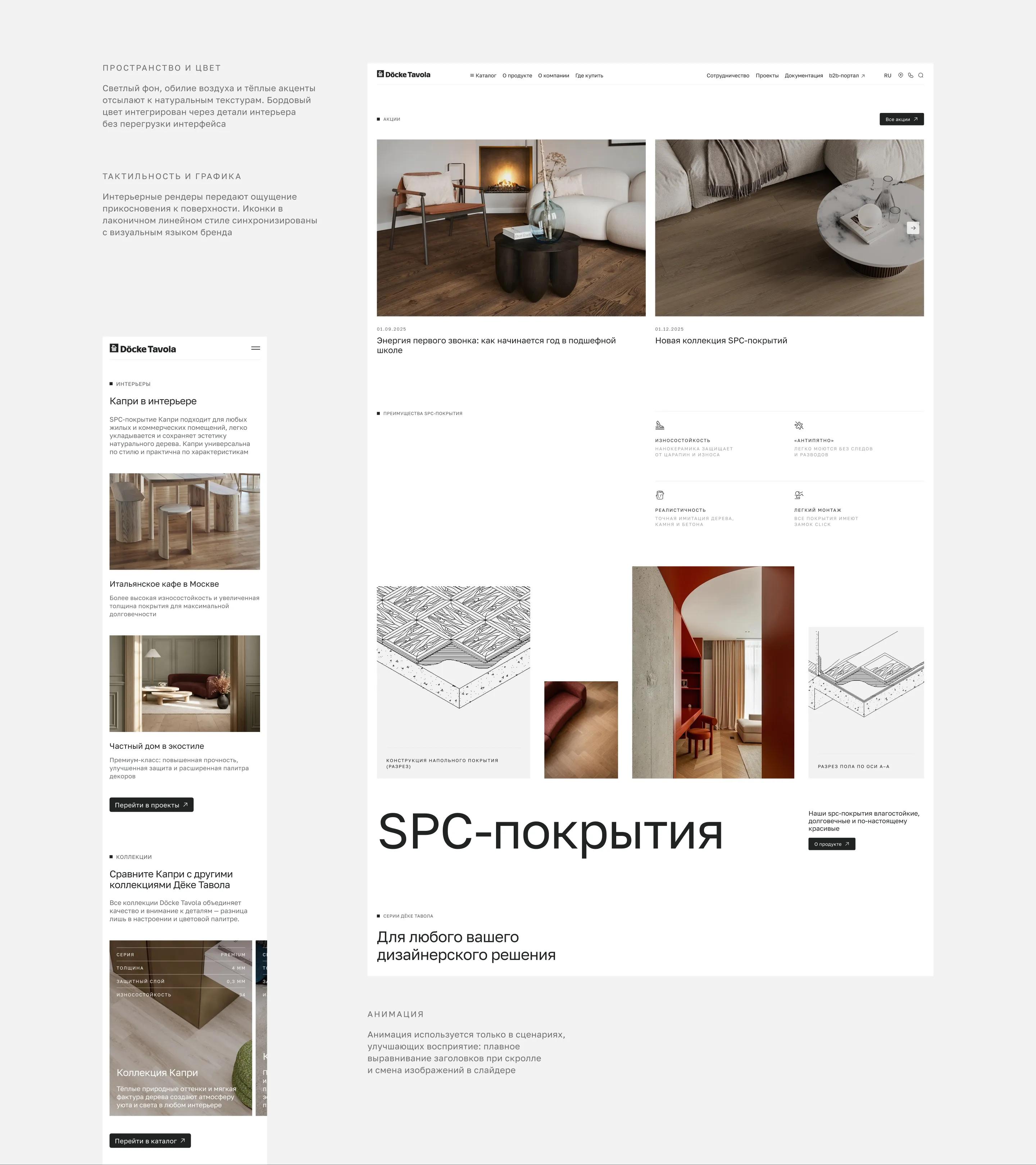
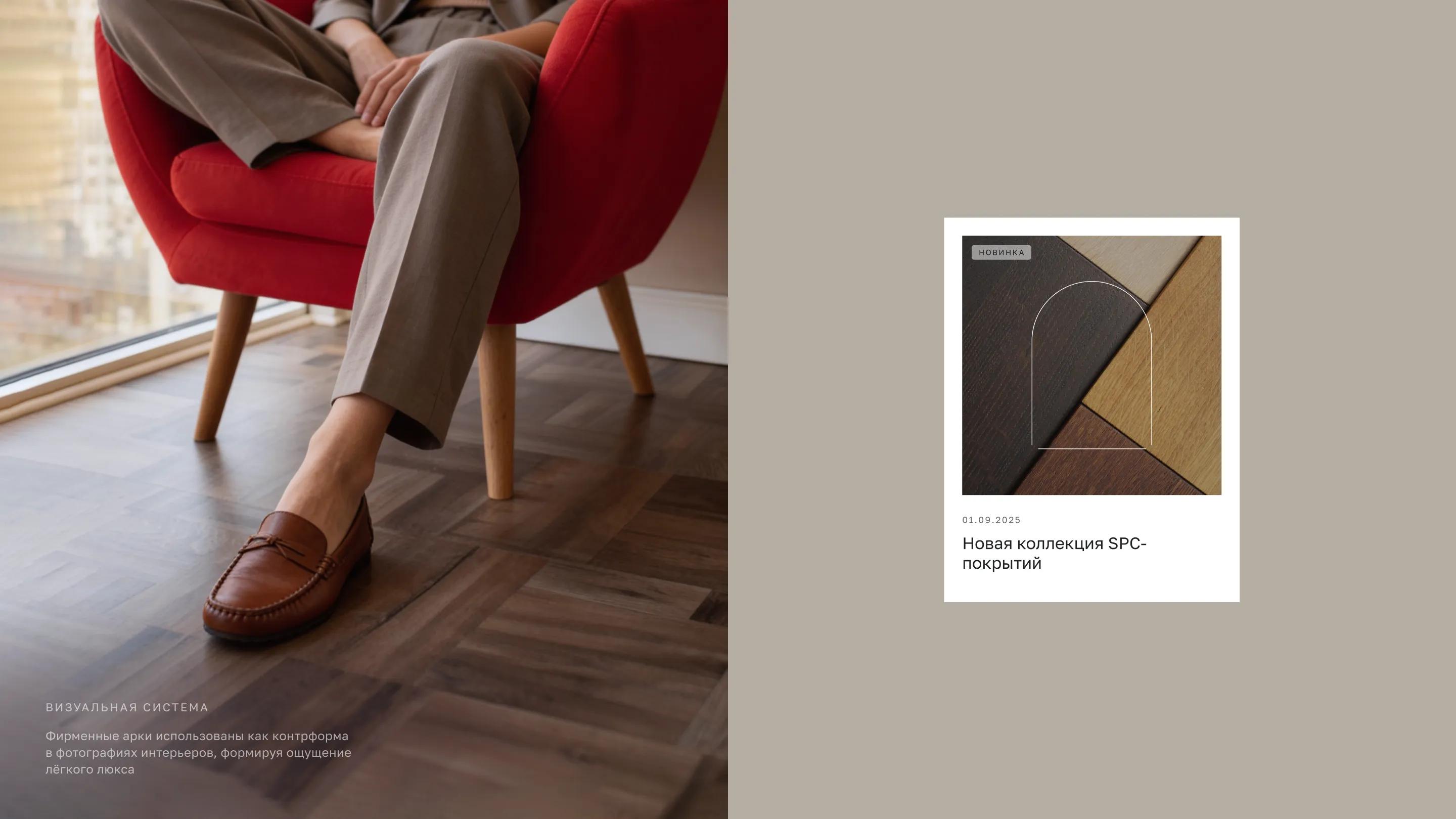
Based on the brand book, the visual identity has been adapted for digital platforms with a focus on balancing a high-tech feel with a warm, premium experience. The visual system reflects Döcke Tavola’s values: aesthetics, engagement, quality, service, humanity, and honesty. This approach creates a cohesive image that serves as a source of inspiration for retailers and a testament to the brand’s expertise for partners.
The website functions as a neutral, functional framework where the atmosphere is shaped by content and spatial design.
Catalog and User Scenarios
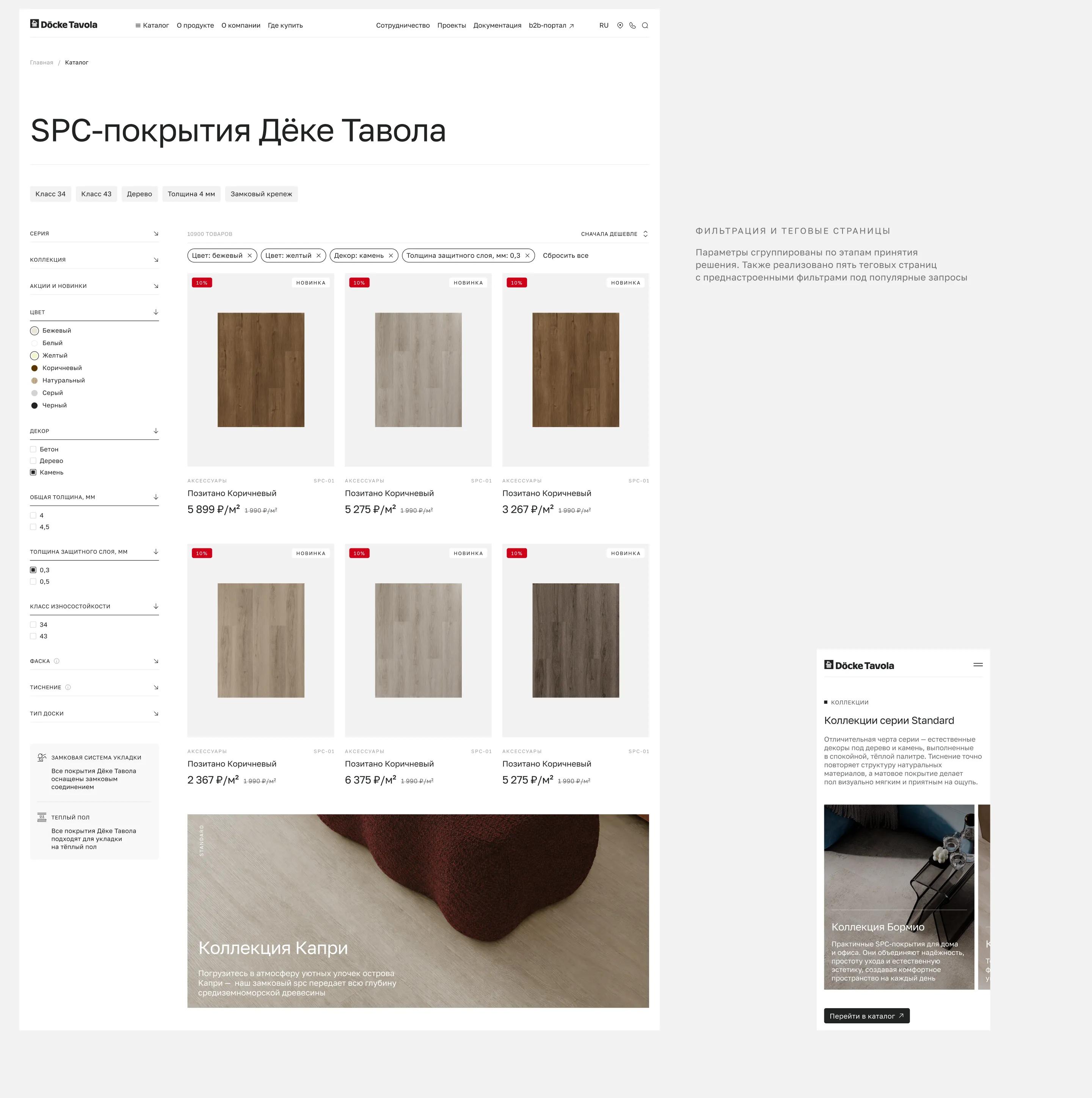
The catalog serves as the central element of the platform, integrating navigation, filtering, and product cards. The architecture takes into account SEO requirements and user journey scenarios, from product discovery to purchase through the dealer network.
Development
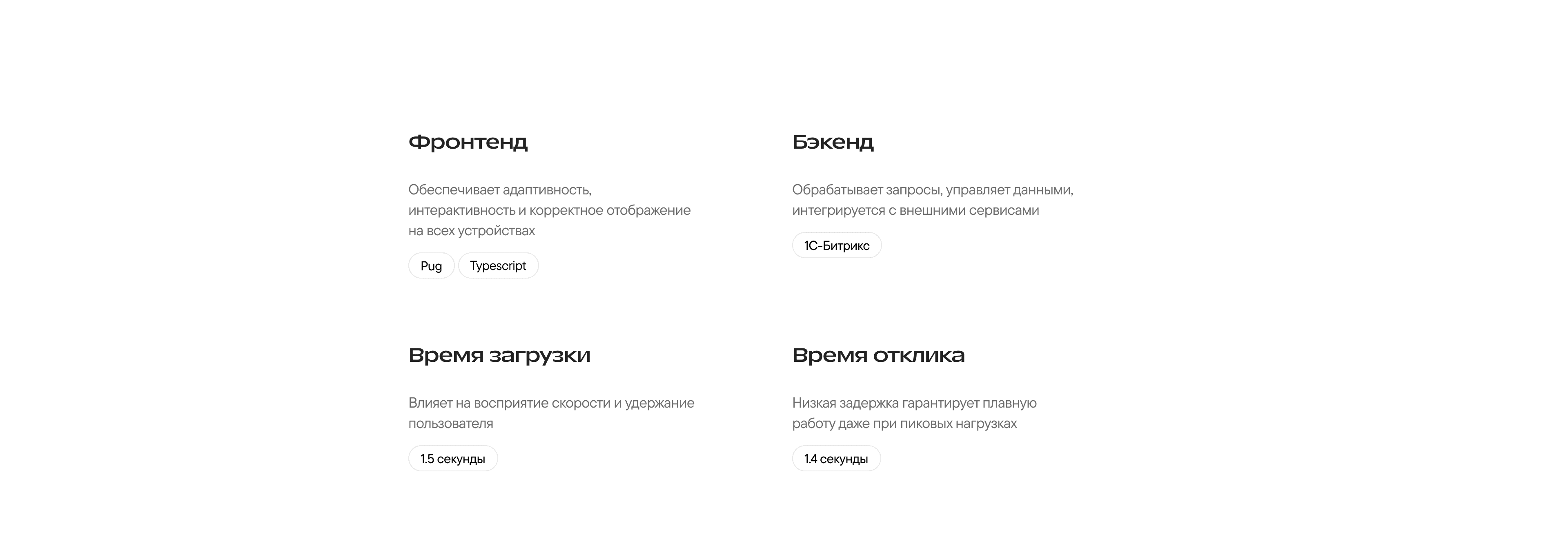
Integration with the corporate ERP system 1C: Enterprise is configured via API: specifications, parameters, and prices are automatically loaded into product records, which simplifies maintenance and ensures data accuracy.
Multi-region and multilingual (RU/EN) support has been implemented with automatic geolocation detection and the ability to manually change the region, which affects the display of points of sale and prices.
The admin panel is configured for self-managed content.
Result
The launch of this image-building tool solidified Tavola’s positioning as a premium sub-brand in the interior design market. Visual aesthetics and functionality are integrated into a unified architecture, enabling communication with the audience through imagery and innovative solutions.
The platform shapes the perception of Tavola as an independent brand while maintaining a direct link to Döcke’s expertise and reputation.