Baltika's internal portal
K.V. Kazantsev
director of information systems - chief information systems architect
We would like to thank the Only team for their cooperation and excellent work, and we wish them continued success in their new, ambitious, and exciting projects!
Development and UX/UI design of a unified digital space for the team
K.V. Kazantsev
director of information systems - chief information systems architect
We would like to thank the Only team for their cooperation and excellent work, and we wish them continued success in their new, ambitious, and exciting projects!
Baltika is Russia's leading brewery and one of the largest FMCG manufacturers
Solution: The project began with a navigation audit and analysis of the main scenario — requesting leave. We formalised the requirements and described all the steps based on the Labour Code of the Russian Federation and the company’s internal regulations.
Shortlist. Digitalization & Transformation. Corporate Portals
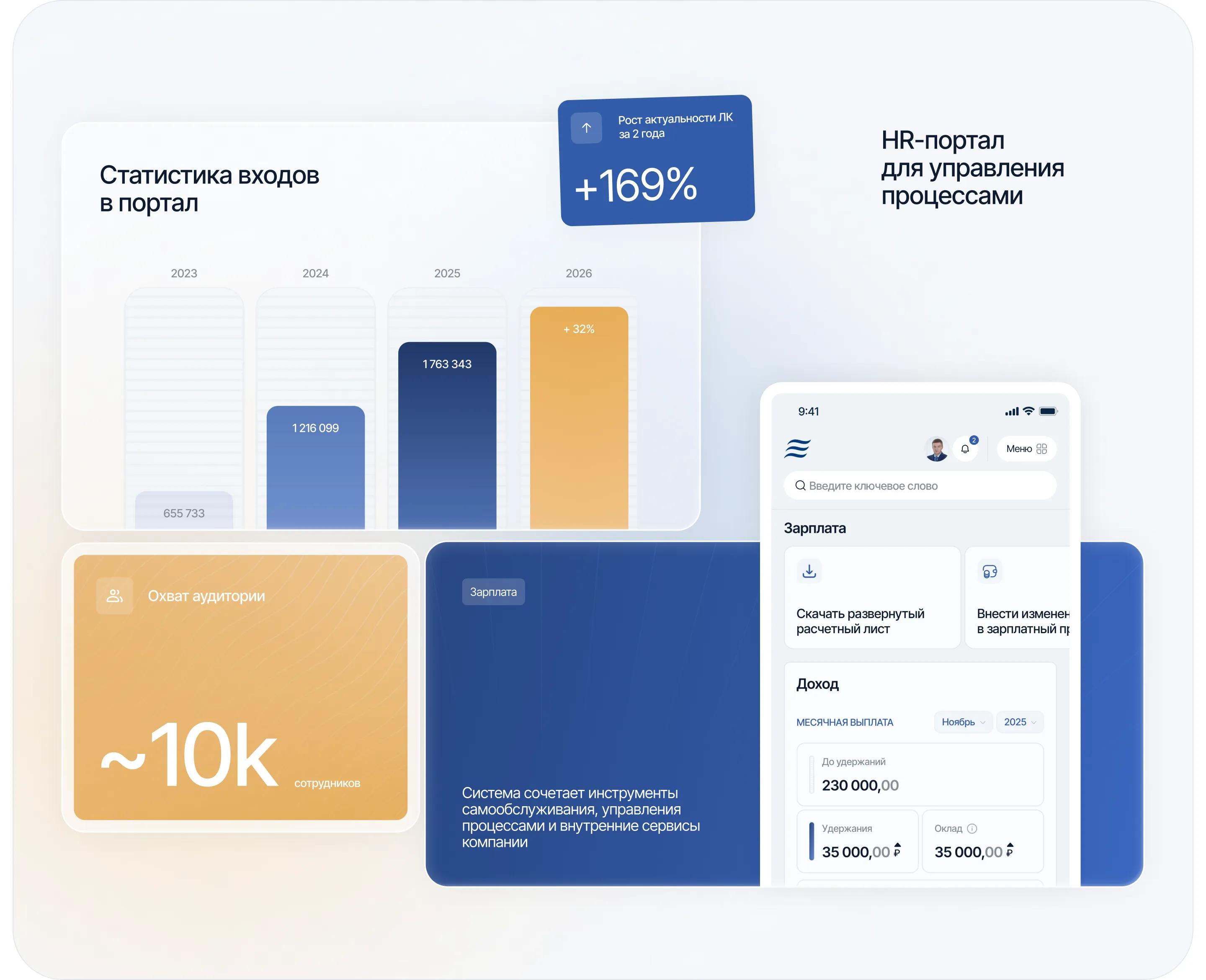
Overhauling the HR portal as a digital product
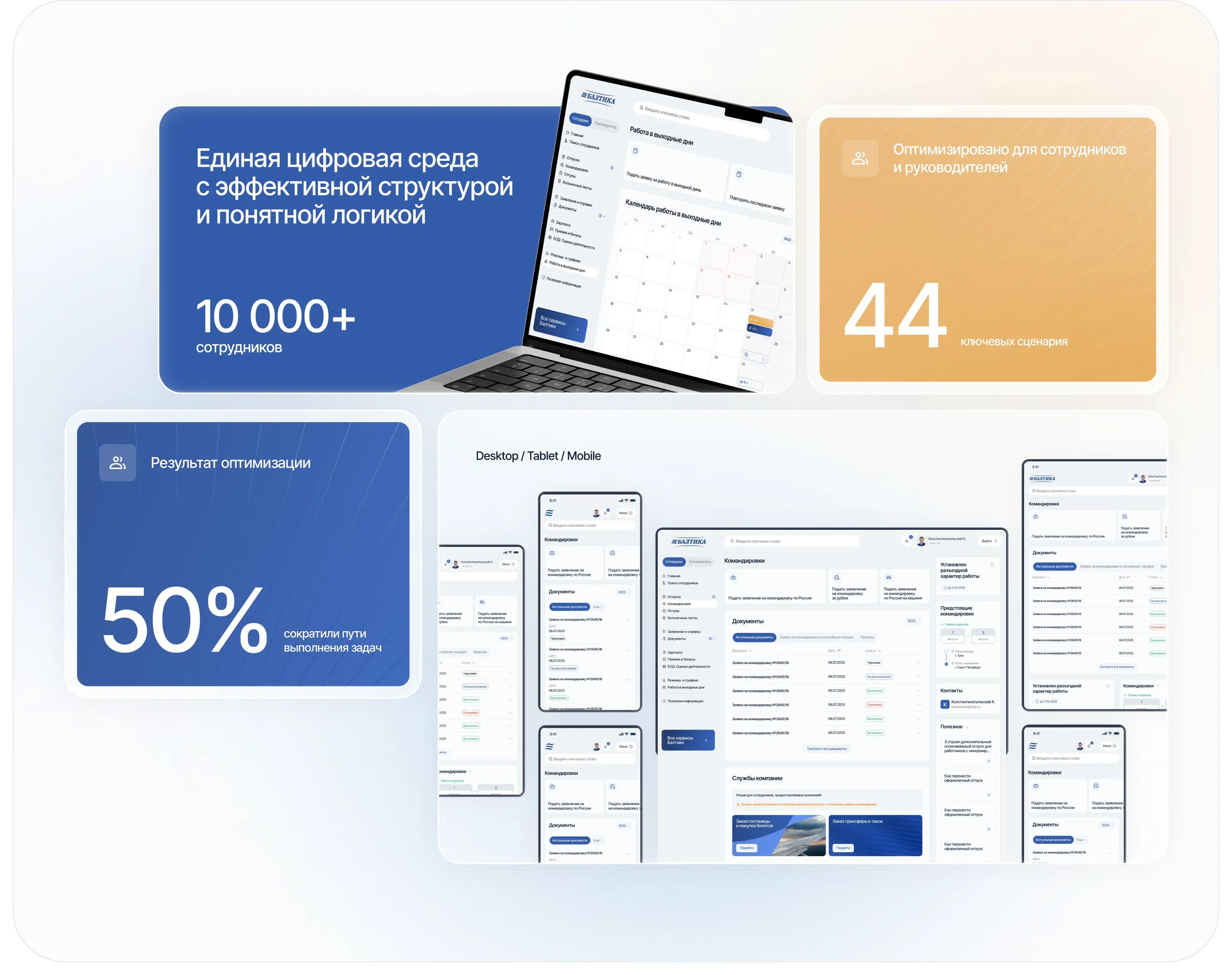
Our goal was to transform the interface into a fully-fledged digital product: to adapt it to different user roles, simplify access to services, and provide scalability
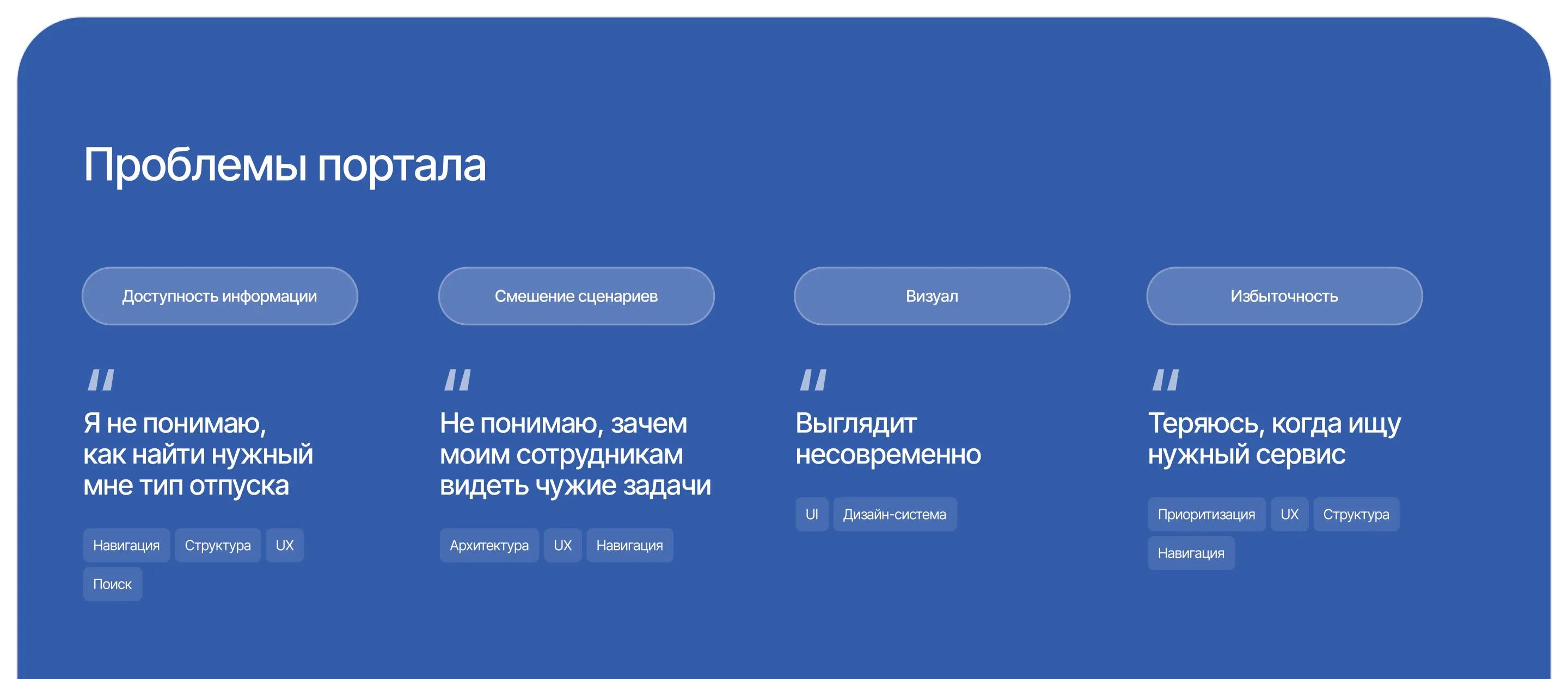
The existing version had systemic limitations:
• users had difficulty finding the features they needed;
• the interface contained redundant information;
• the dashboard structure was cluttered and confusing;
• operational and managerial workflows were mixed together;
• the visual style and components were outdated.
As part of our approach, we developed a completely new, modern interface (from UX analytics to front-end development):
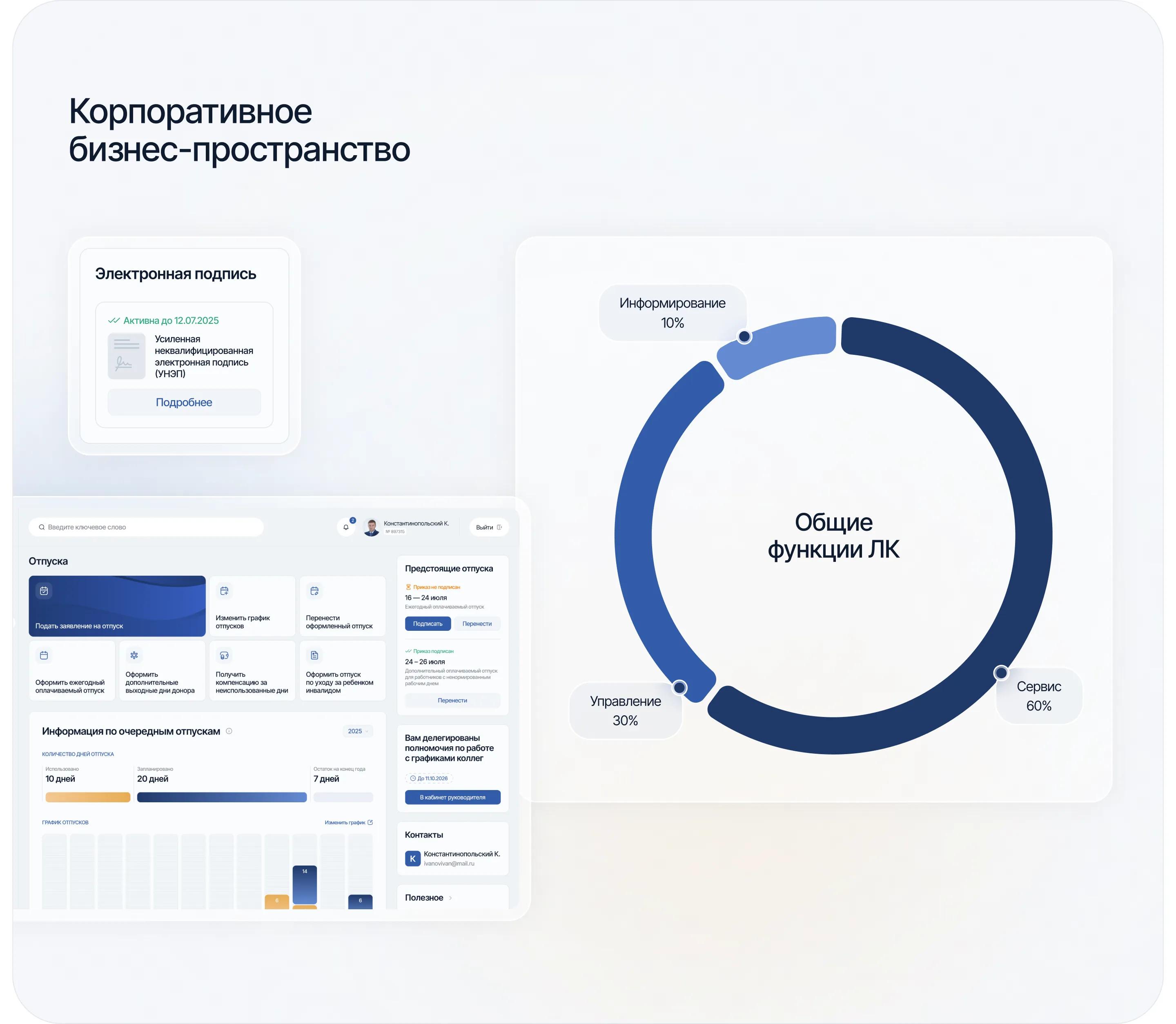
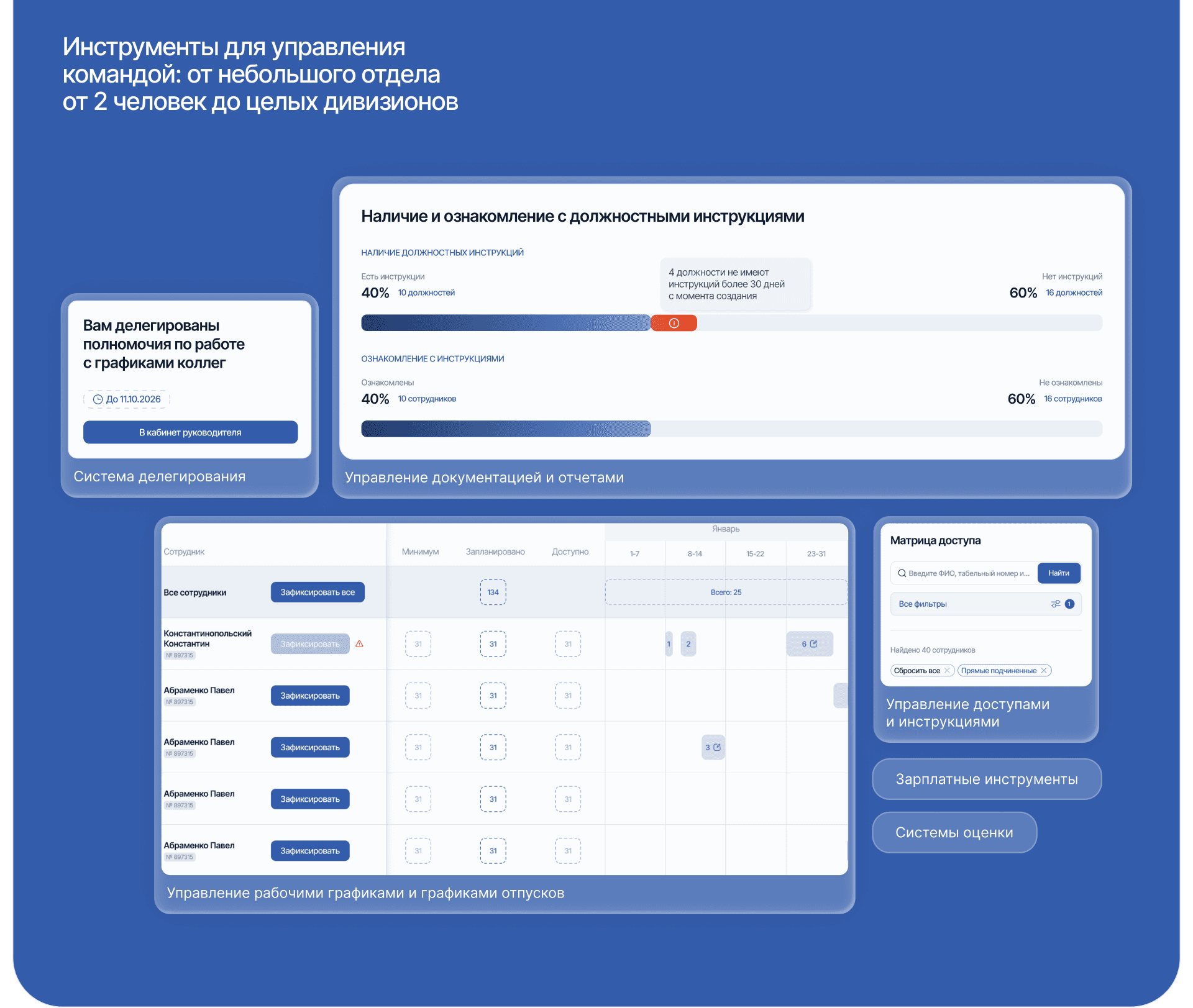
• clearly separated functionality for employees and managers based on their roles;
• organized navigation so that services could be found quickly and intuitively;
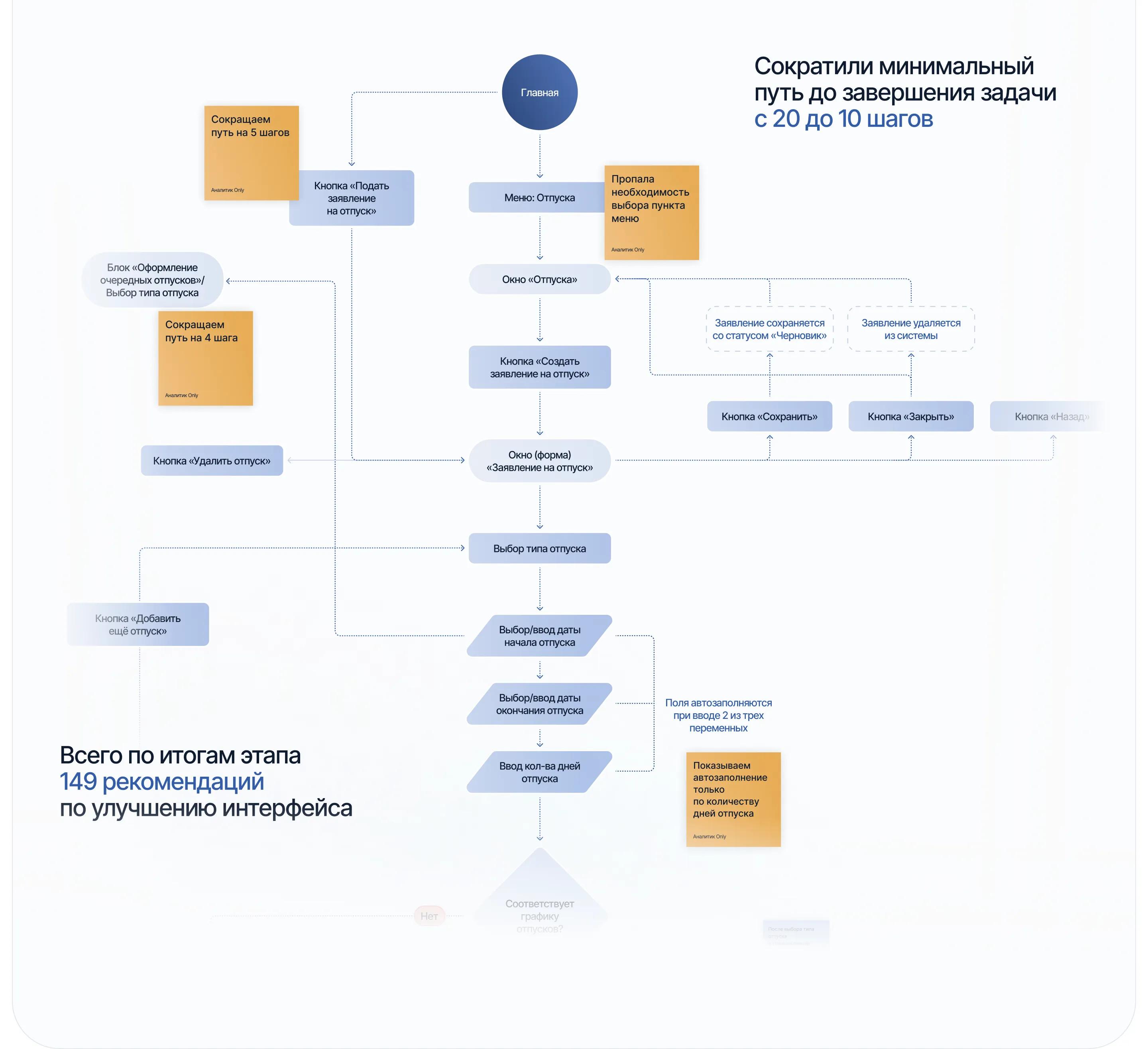
• simplified user flows and reduced unnecessary steps;
• implemented an analytics system for product development based on actual usage.
As a result, the HR portal was reimagined as a user-friendly and scalable digital product that fulfills its true role within the company and makes interactions between employees and managers with corporate services simpler and more efficient.
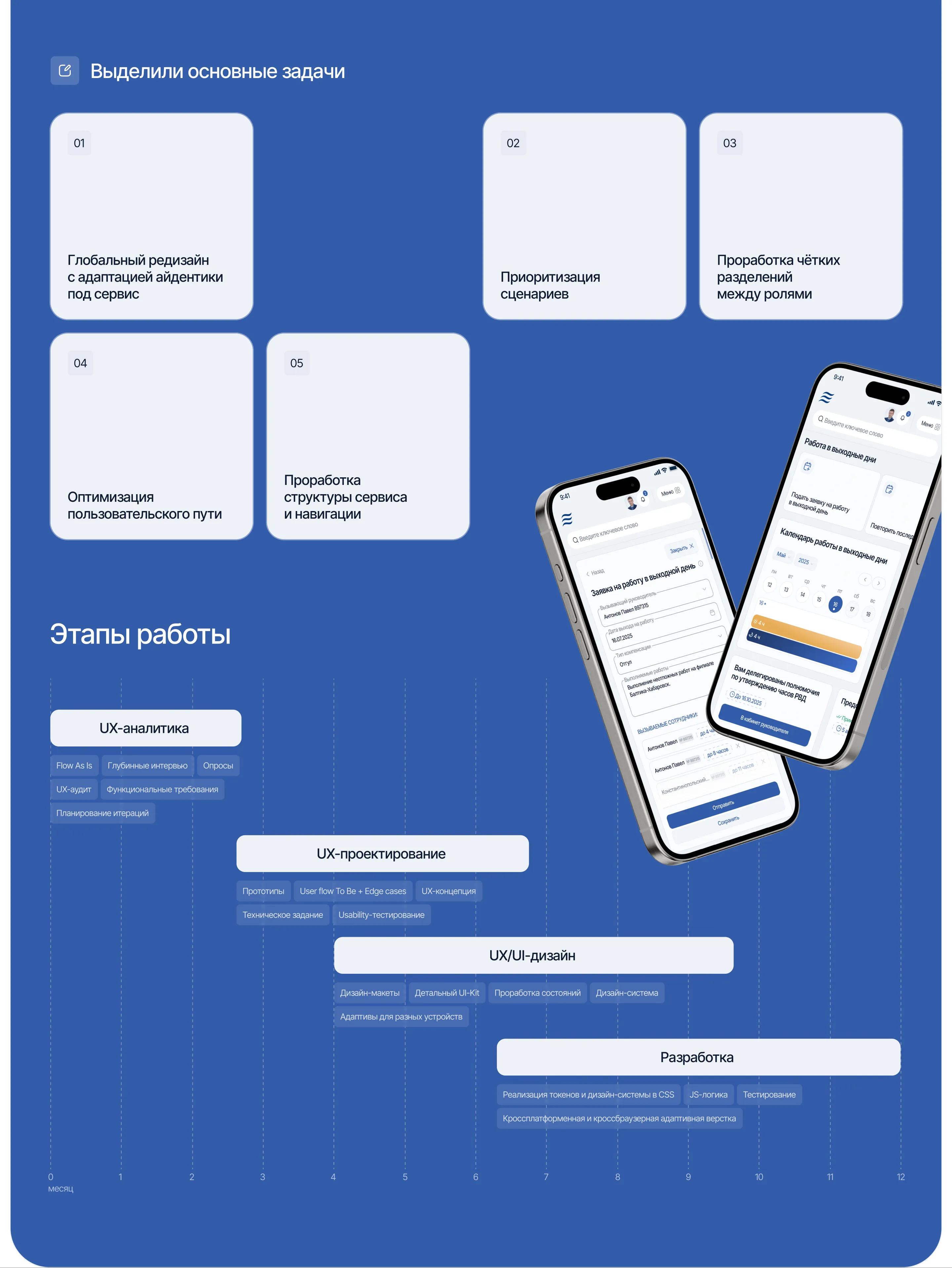
UX Analytics and Customer Development
We focused on the essentials: understanding what tasks users actually perform on the HR platform and how the service should function to be intuitive and user-friendly, even before we began the design and development phases.
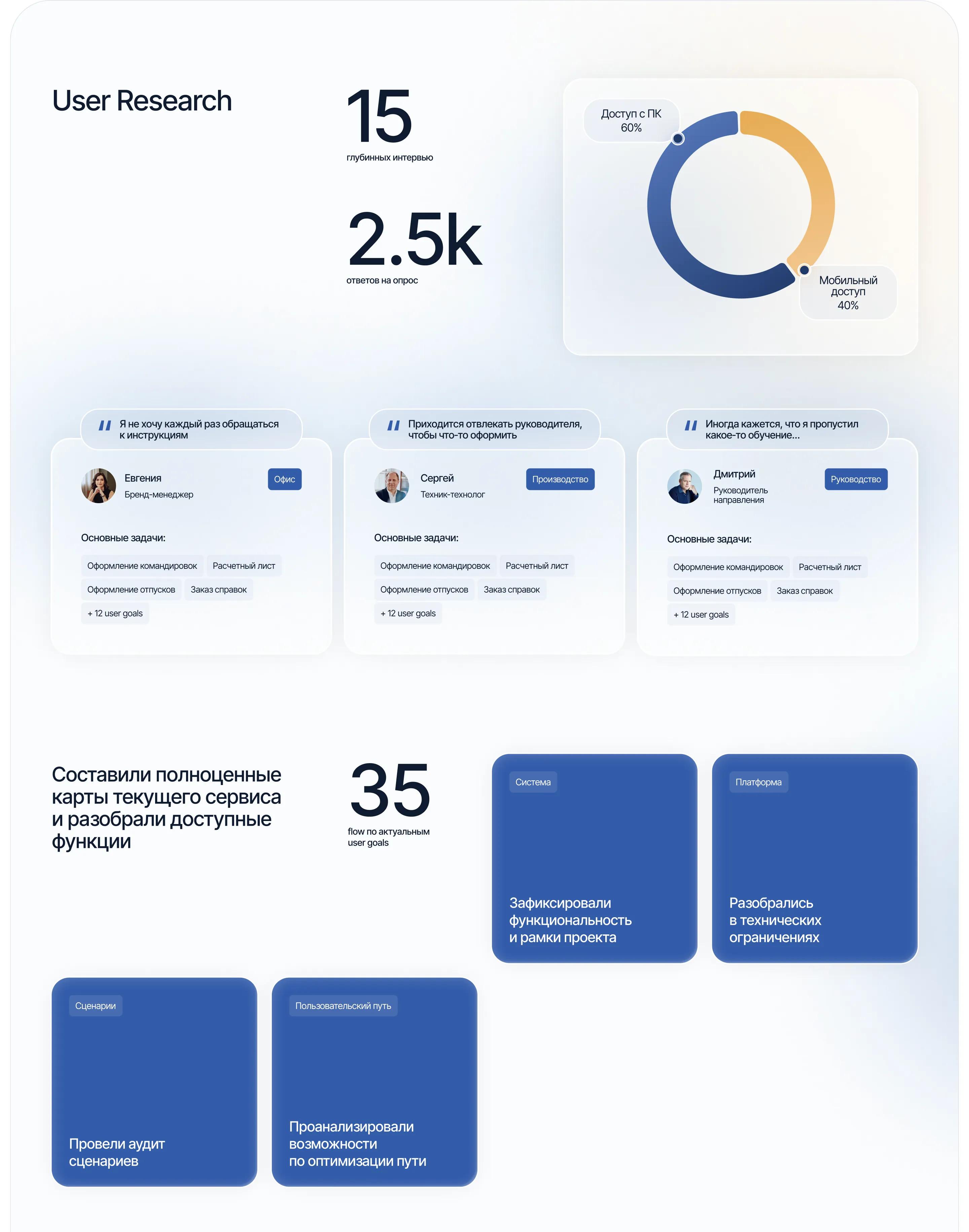
We thoroughly examined the current functionality, identified backend limitations, and analyzed how similar tasks are handled on other HR platforms. Interviews and surveys with employees helped us understand real-world usage scenarios, key frustrations, and expectations for the service.
During our research, we gathered the optimal amount of user data: feedback on the current user dashboard, context, and the problems and tasks that employees use the service to address.
Next, we broke down the functionality into specific user tasks: we identified priority scenarios, restructured the service, and designed optimal user flows for key actions.
As a result, a unified UX logic for the service was established, giving the team a clear understanding of roles, scenarios, and directions for further development.
UX Concept and UX Design
During the UX design phase, the team translated the established logic into practical interface solutions and clear user scenarios.
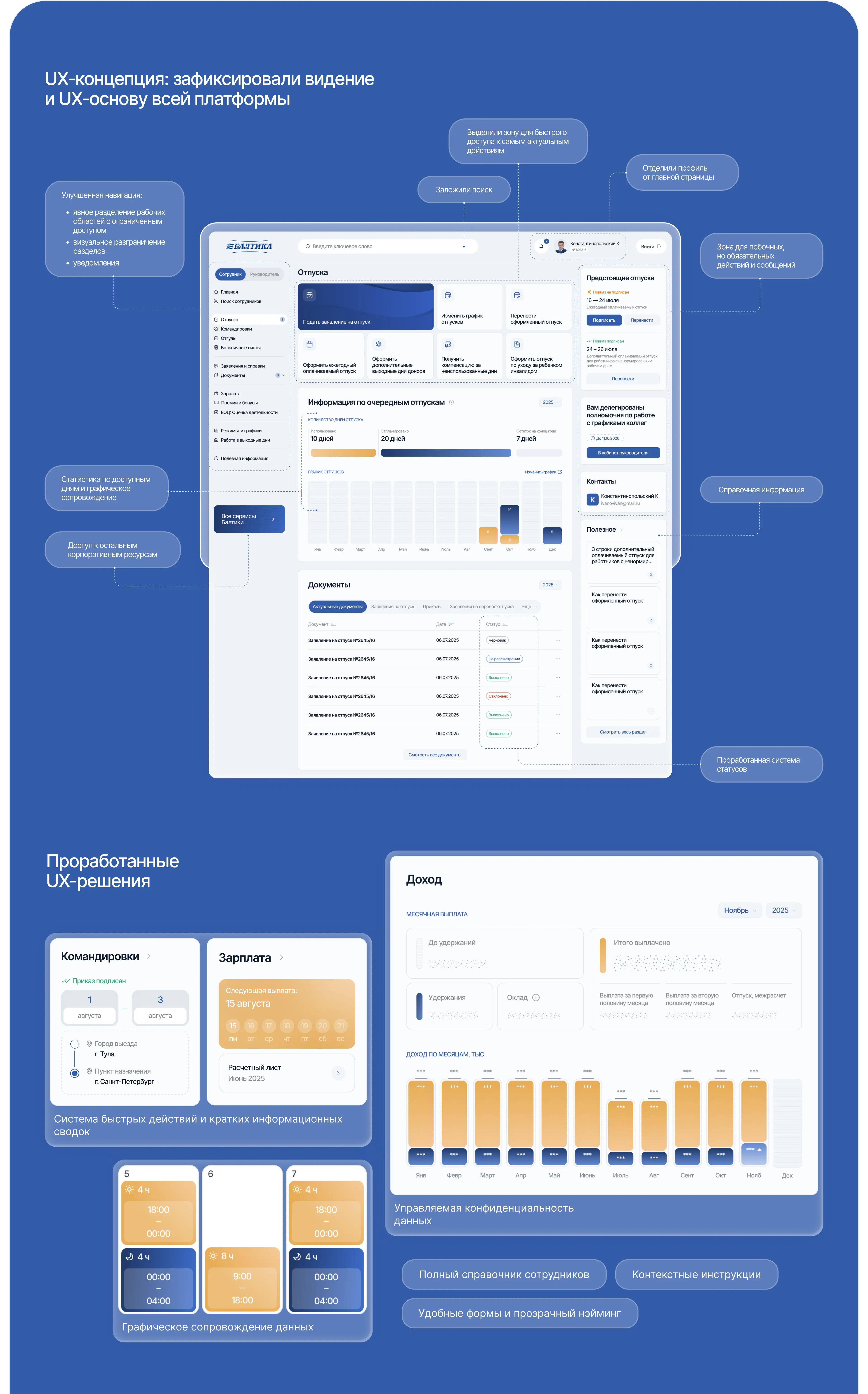
Firstly, the UX concept for the HR platform was developed: the service format, navigation, and the logic for the layout of information, functional blocks, and key elements were defined. This allowed us to establish consistent interaction principles and ensure the integrity of the user experience.
Next, mockups of the defined scenarios were developed, ranging from lo-fi wireframes to detailed design mockups with elaborated states, transitions, and interaction logic. Special attention was paid to the mobile experience, as a significant portion of users access the service via smartphones.
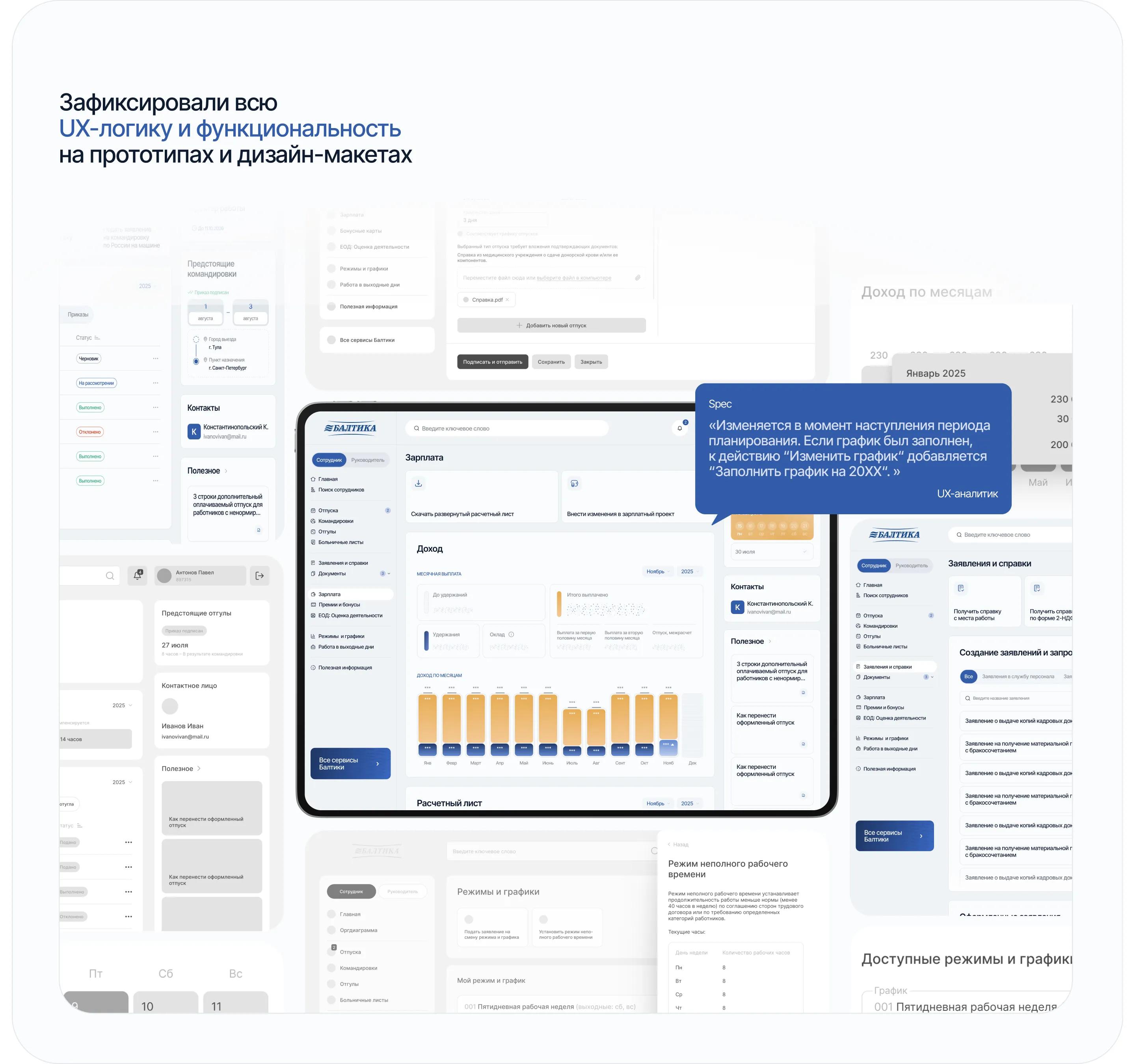
Design Standards and Scope
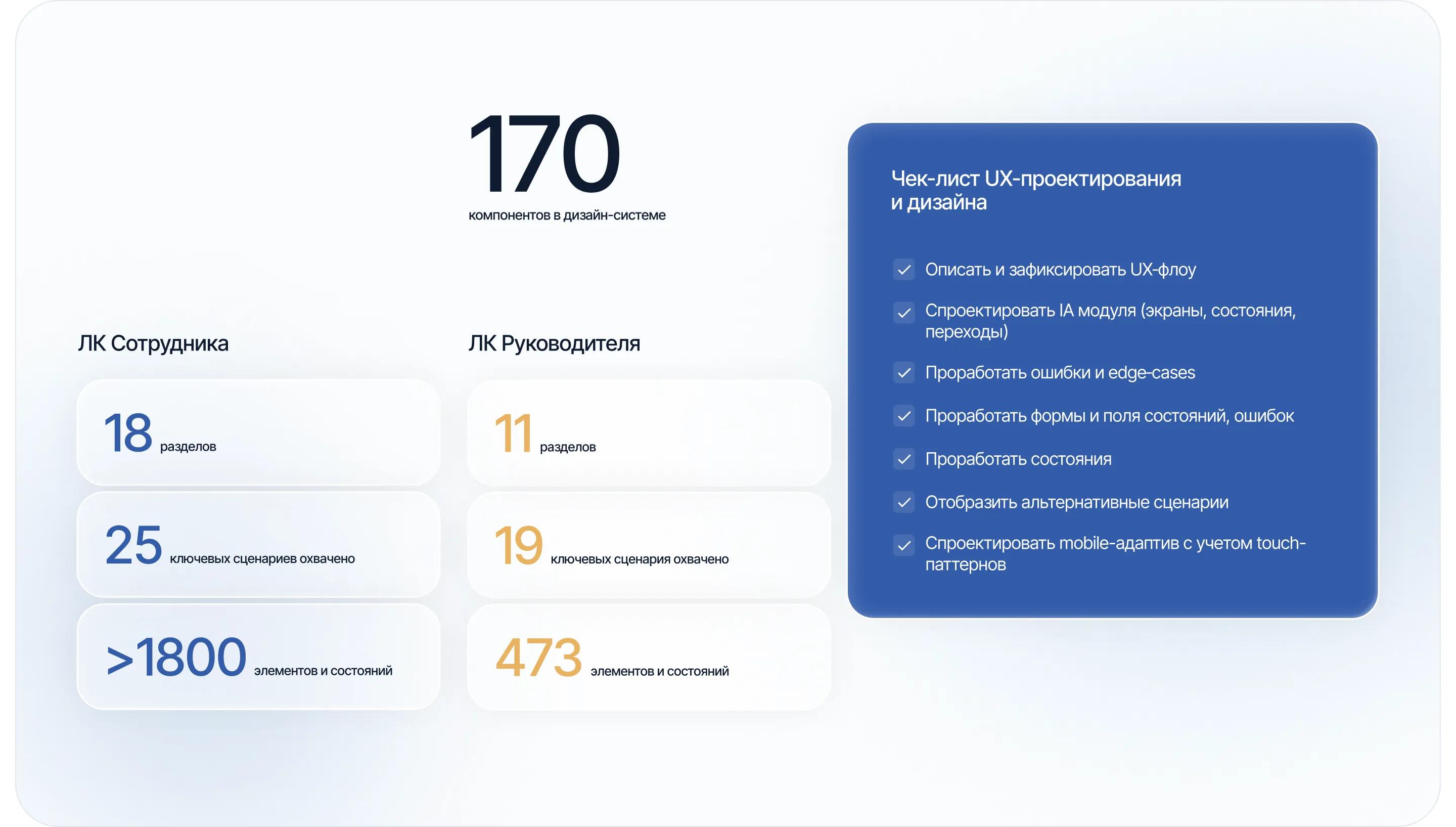
We developed mockups for key scenarios, ranging from lo-fi wireframes to design mockups, with detailed specifications for screen states and interaction logic.
UX Testing
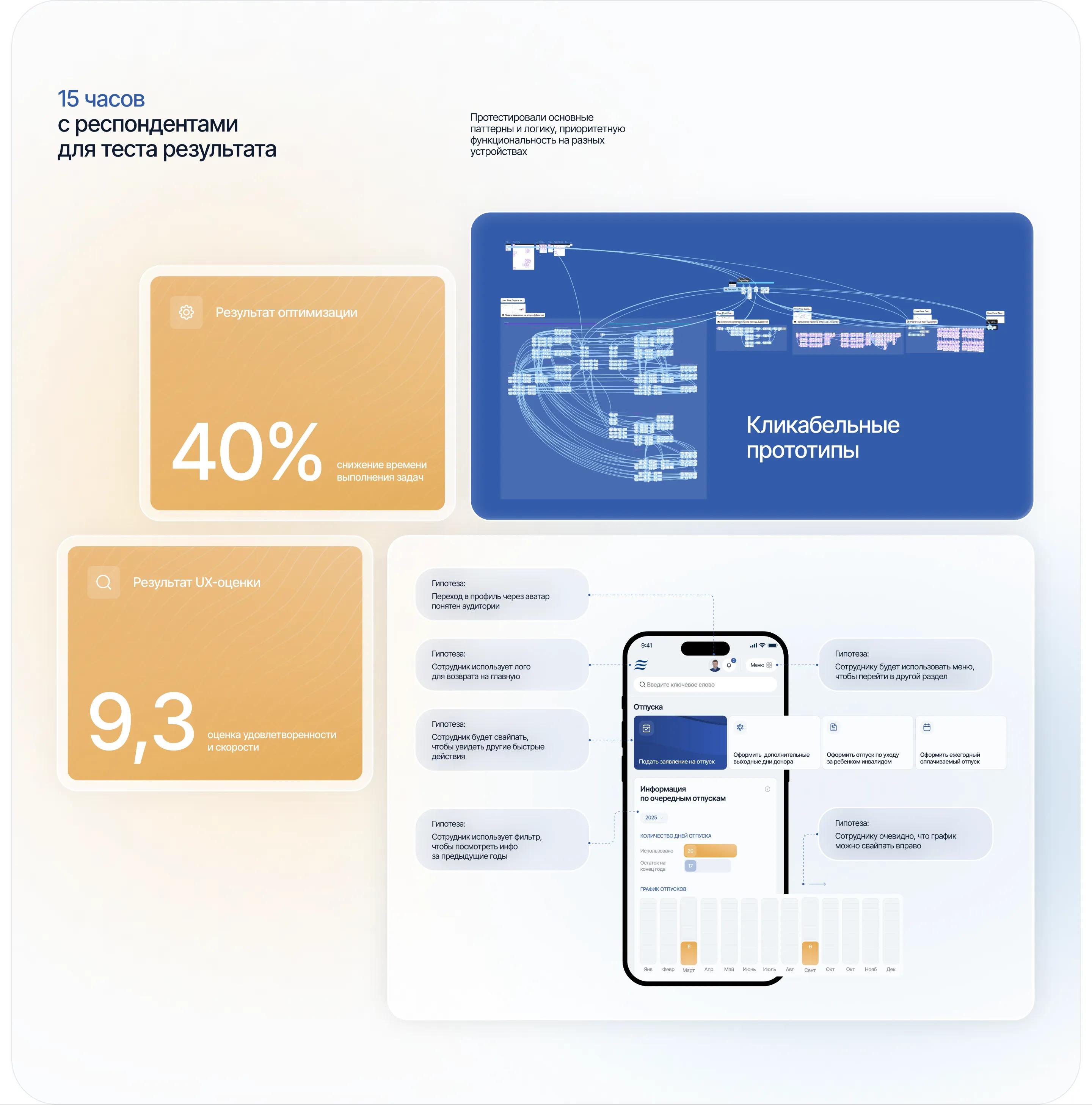
To validate the solutions, the team conducted usability testing of the desktop and mobile versions of the HR portal with users in various roles. The tests focused on key scenarios, navigation, and the logic of user interaction with the interface.
The feedback received helped identify problem areas and points where the user journey could be simplified. Based on the test results, the mockups were refined: the structure was clarified, scenarios were adjusted, and interaction with the interface was improved to make the service more intuitive and user-friendly.
UI Design
During the UI design phase, the team focused on ensuring that the service’s visual language supported the logic and use cases established in previous phases, making the HR platform easy and comfortable to use.
We refined the brand color palette, making it more modern and functional: the colors now work better with accents, element states, and the visual hierarchy. This allows users to quickly grasp important information and navigate the interface.
We paid special attention to the graphics. A unified icon set was developed to visually structure functional blocks and simplify navigation. To highlight key elements and scenarios, we implemented visual patterns and accents that draw attention without overloading the interface.
The result was a cohesive UI language for the HR platform—modern, recognizable, and scalable—that supports the growth of functionality and provides a consistent visual experience for employees and managers across all devices.
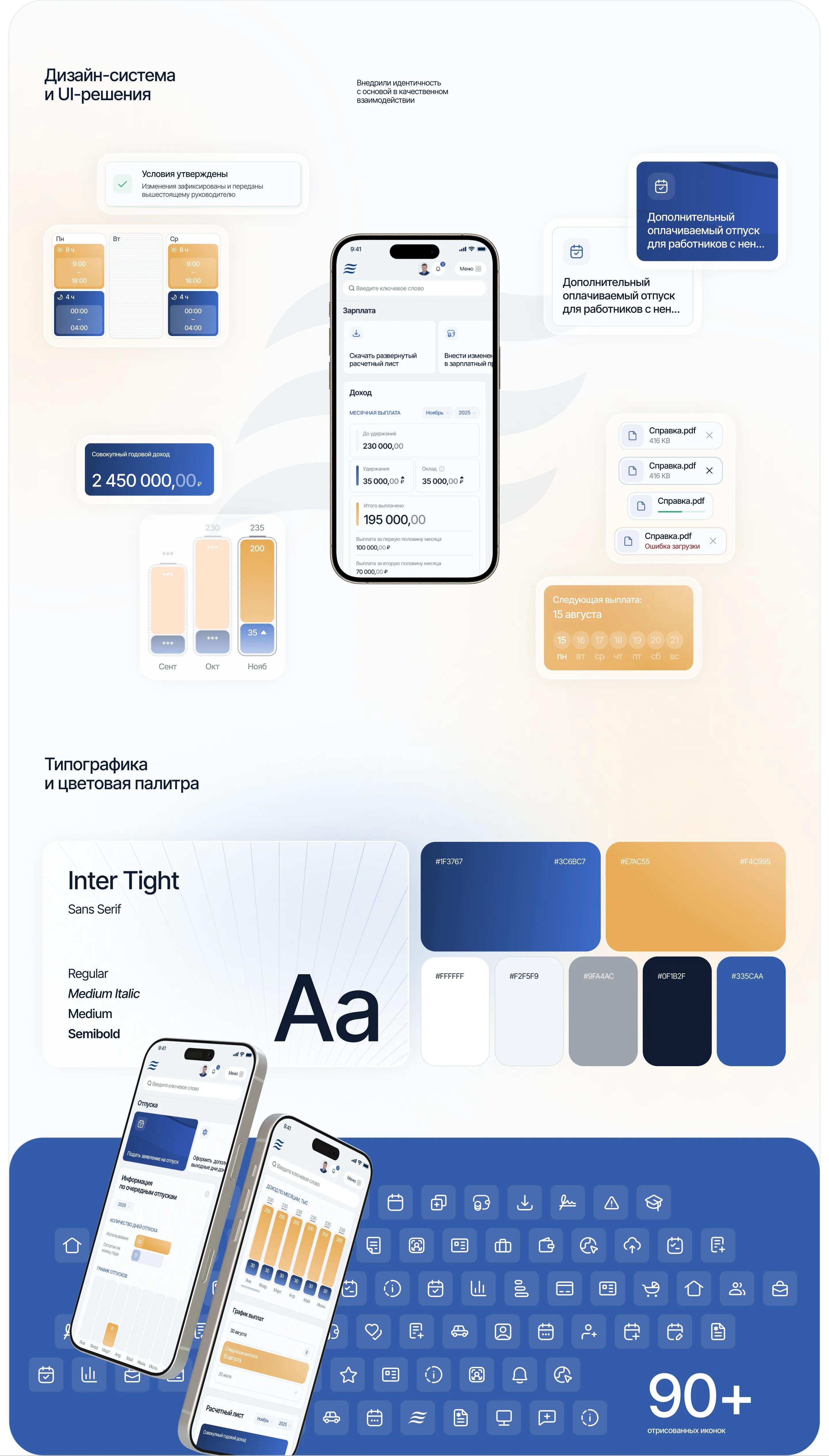
A flexible UI kit as a scaling foundation
We’ve created a unified visual experience across all devices, one that future solutions will seamlessly integrate into. The result is a cohesive UI language for the platform, with the right emphasis and information hierarchy.
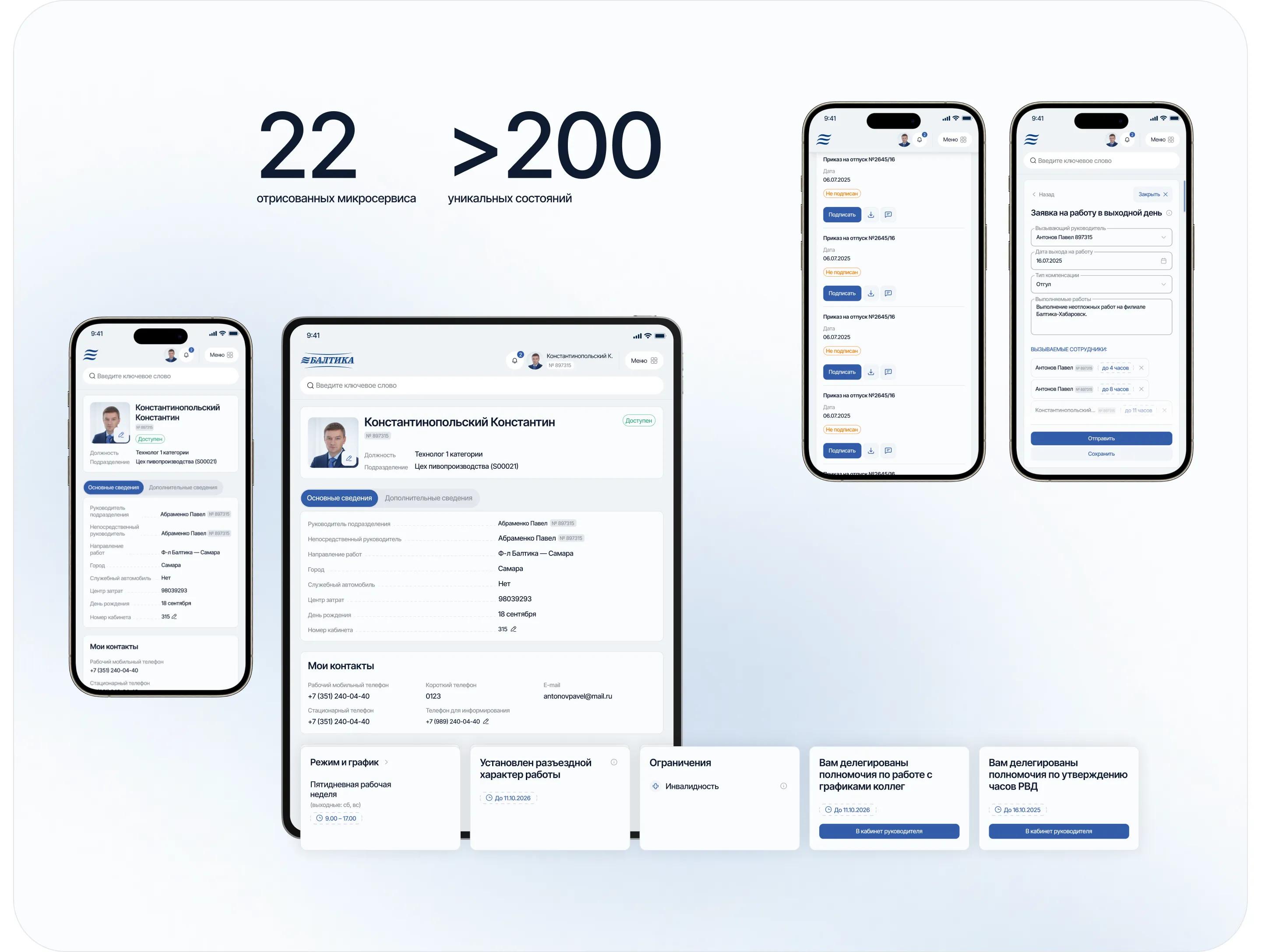
Development and integration with the backend
During the development of the HR platform’s client-side layer, we handled the entire front-end development cycle, including preparing the foundation for integration with the back end.
We implemented the design system and CSS tokens, established the component structure, and laid the groundwork for consistent interface scaling principles. We paid special attention to the JavaScript logic and how the interface performs in real-world use cases. The layout was designed with cross-platform and cross-browser compatibility in mind, ensuring the HR platform operates with consistent stability across different devices and environments.
To ensure proper integration with the backend, we prepared functional and technical documentation: we described the interface’s logic, API requirements, and frontend-backend interaction scenarios.
As a result, the team received a stable and scalable front-end foundation, ready for integration with the back-end and further development of functionality without compromising the user experience.
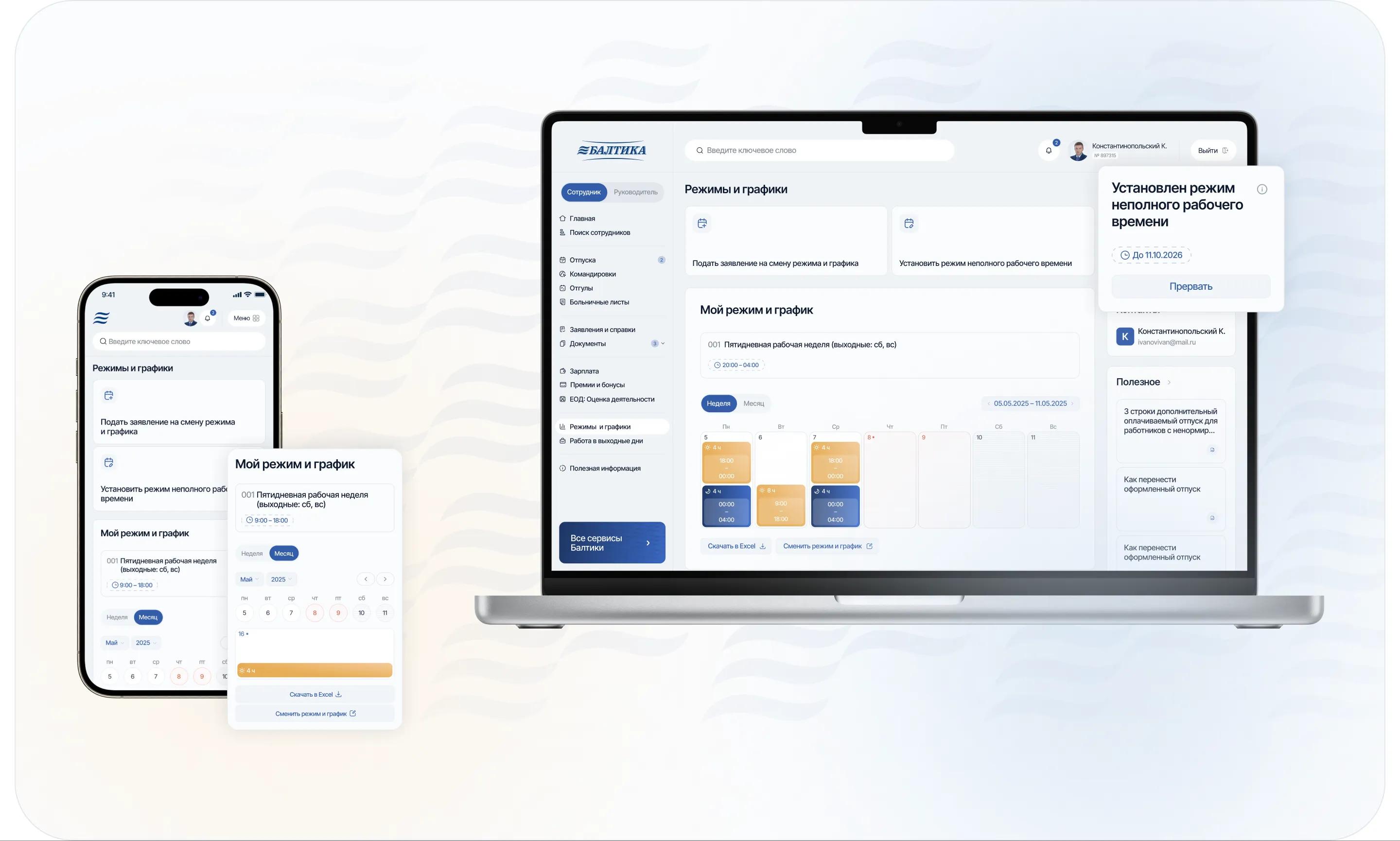
Result
As a result of the project work, the HR platform was reimagined as a cohesive digital product rather than a collection of disparate services. The platform now features a clear structure, a modern interface, and a well-defined interaction logic that takes into account the real-world scenarios of employees and managers.
The updated solution simplified access to key features, reduced the number of unnecessary steps, and lowered the barrier to entry for new users. A clear division of roles and scenarios allowed each type of user to complete their tasks more quickly without being distracted by irrelevant information.
The platform became scalable: a unified UX and UI logic, design system, and analytical foundation allowed the team to further develop the service—adding new functionality and adapting it to growing business needs without reworking the core solutions.
As a result, the HR platform has evolved into a user-friendly and robust digital tool that supports daily workflows, reduces the burden on support, and fulfills its true role within the company.