«YARVET»: a platform for B2B and B2C sales with a feature-rich user dashboard
Development and design of a B2B platform for a veterinary pharmaceutical distributor featuring a multifunctional user dashboard and catalog
“Yarvet” is a major distributor of veterinary medicines, animal feed, and equipment
A company website is not just a showcase, but a working tool. However, the old version no longer met the scale of the business. Our goal was to create a tool that truly helps the business and its customers. That’s why we developed two products: we redesigned the website and completely revamped the customer portal.

Context and Objective
Key project objectives:
1. Automate routine tasks. Orders, documents, and rewards—so customers can access everything in their personal account without having to call a manager.
2. Create a user-friendly catalog for wholesale customers. Customers purchase products for chains of clinics and agricultural operations. The site must display real-time inventory, personalized pricing, and provide intuitive navigation through the extensive catalog.
3. Ensure quick access from anywhere. Veterinarians and farmers often work from their phones in the field or in the warehouse—the interface must be simple and responsive.
4. Convey expertise. The new design is modern, professional, and inspires trust among the B2B audience.
We created a user-friendly digital platform for B2B purchasing and business process management called “Yarvet.” The storefront handles search and order placement, while the personal account manages documents, bonuses, and roles within the company. Everything is connected by a common logic and supports real-world workflows. Together with the client’s team, our analysts worked out all roles and scenarios in detail to ensure that every feature is intuitive and effective.
Analytics
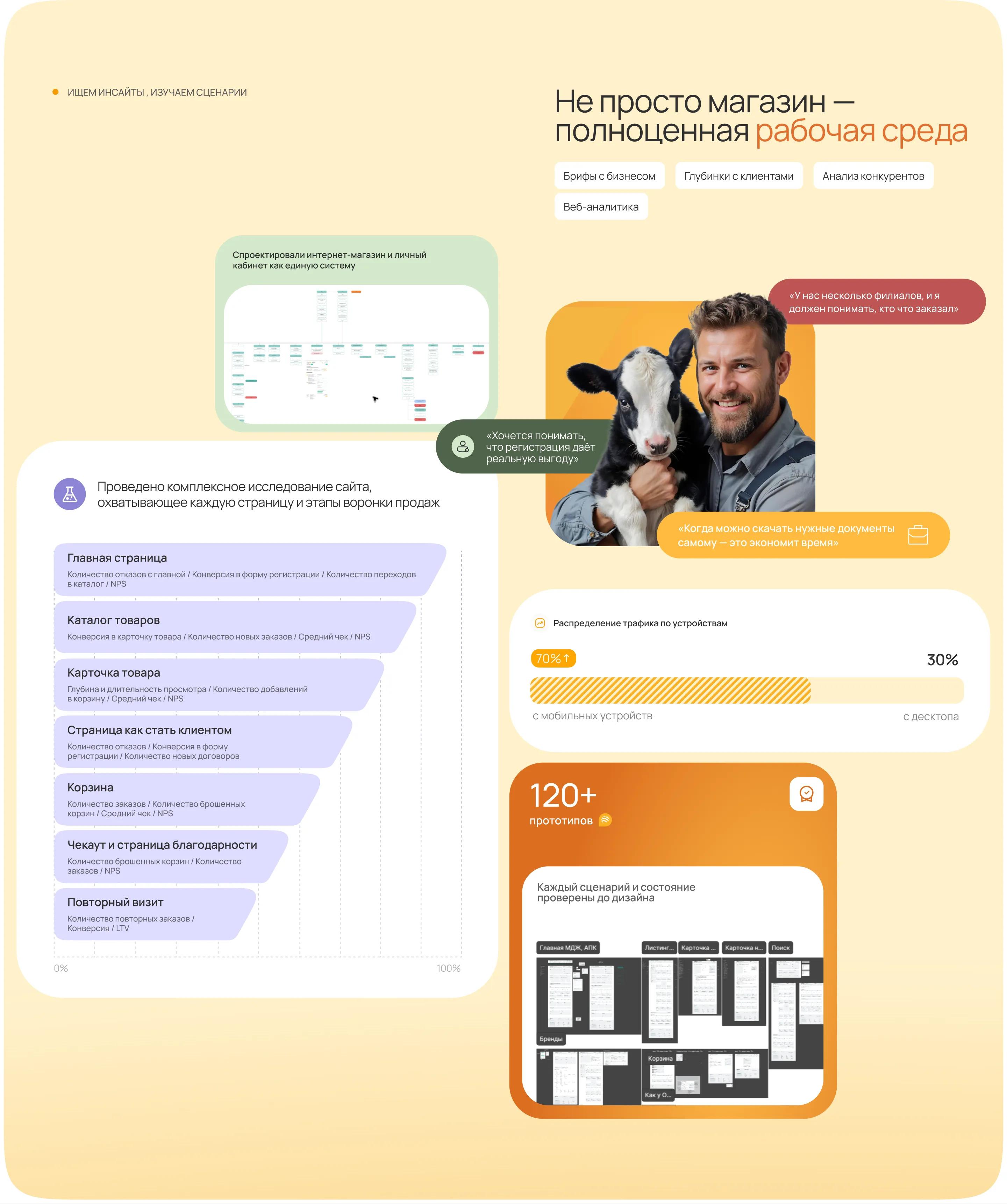
We started by studying actual customer behavior: we conducted in-depth interviews, analyzed web analytics data and user session recordings, and identified recurring scenarios and pain points.
This yielded several key insights.
How customers actually use the product:
• Orders are often repetitive: customers buy the same set of products regularly and expect a quick process without unnecessary steps;
• Users often access the site from their phones, but the mobile version struggles with complex actions—as a result, some orders are postponed or redirected to a manager;
• The lack of prices without registration is one of the main reasons for new users abandoning the site;
• When difficulties arise, customers prefer to contact a manager rather than figure out the interface on their own;
• A significant portion of inquiries to managers are not related to purchases but to related tasks: documents, invoices, bonuses, and terms of service.
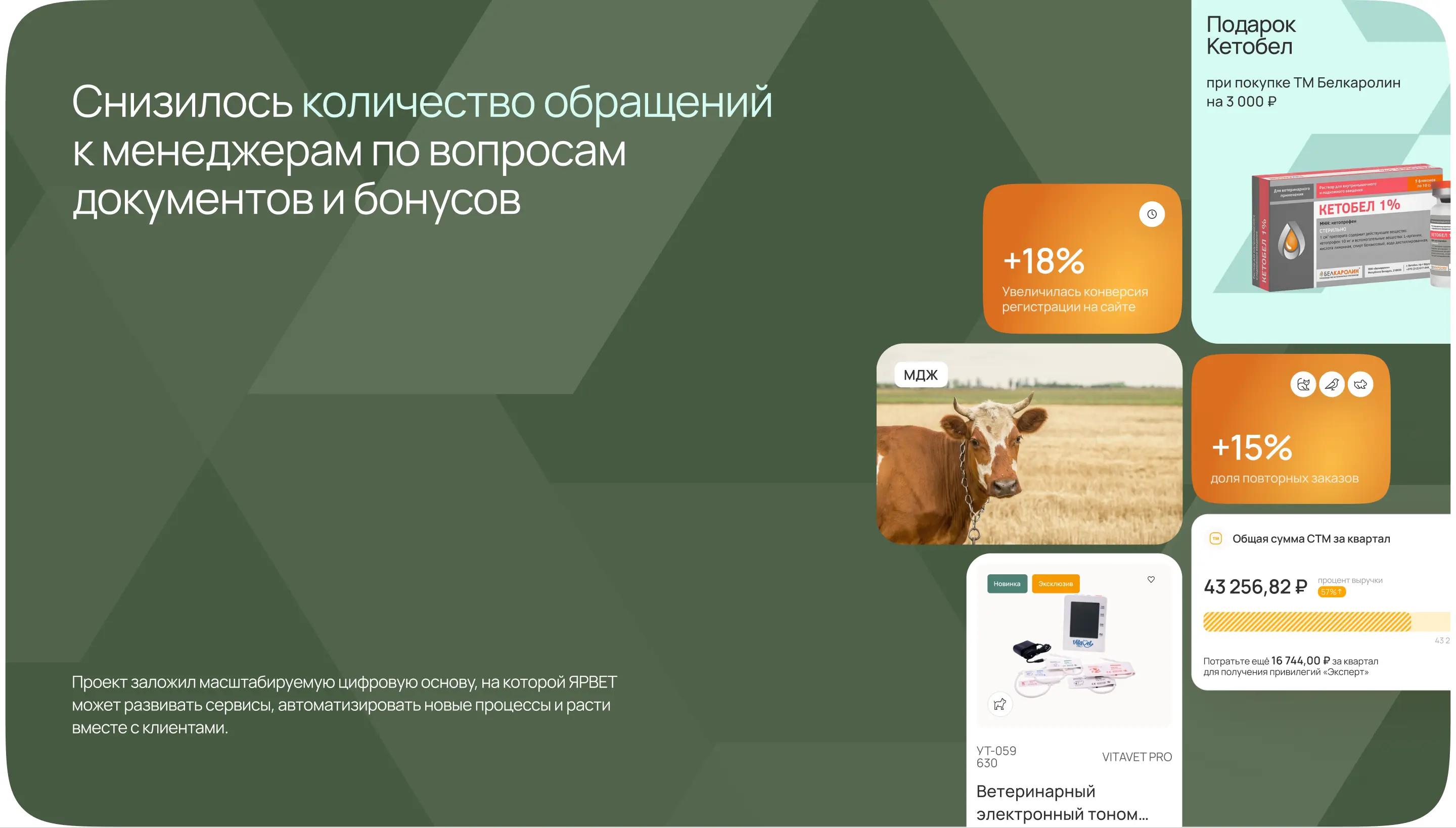
The analytics phase revealed the key findings: the website is in demand and actively used, but it does not support key customer workflows and does not address their primary concerns—as a result, a significant portion of processes remains outside the digital product.
Design
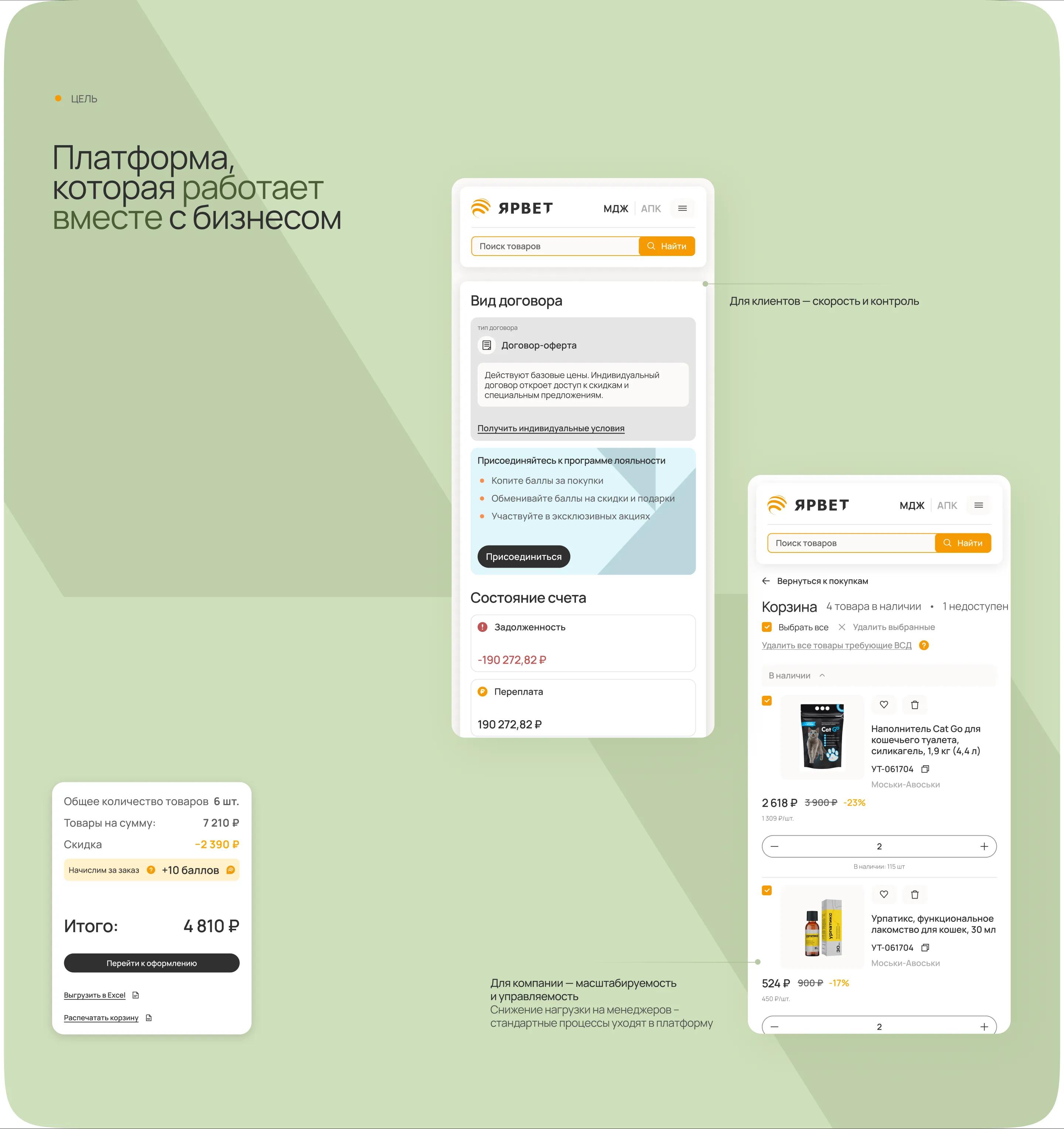
We designed the online store and the personal account as a single system, where the storefront and the administrative tools are linked by a common logic. Due to the multi-level access model, a single screen now has several states: for unregistered users, customers with personalized terms, and different roles within the personal account.
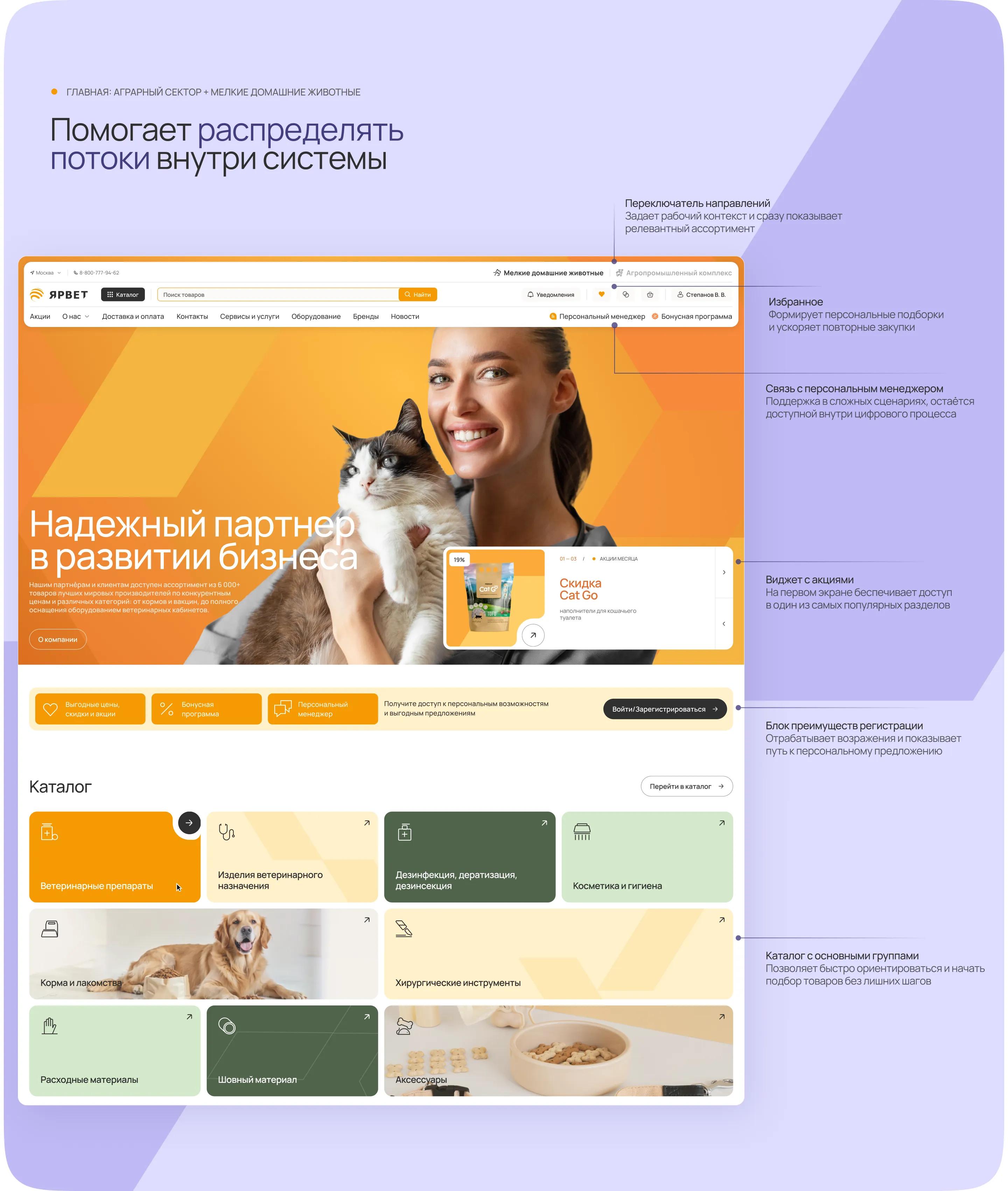
Home page: two logics in a single interface
Our analysis revealed that customers in the agricultural and small pet sectors interact with the website differently. Not only do their product ranges and order frequencies differ, but so do their purchasing processes, reward systems, and expectations of the service.
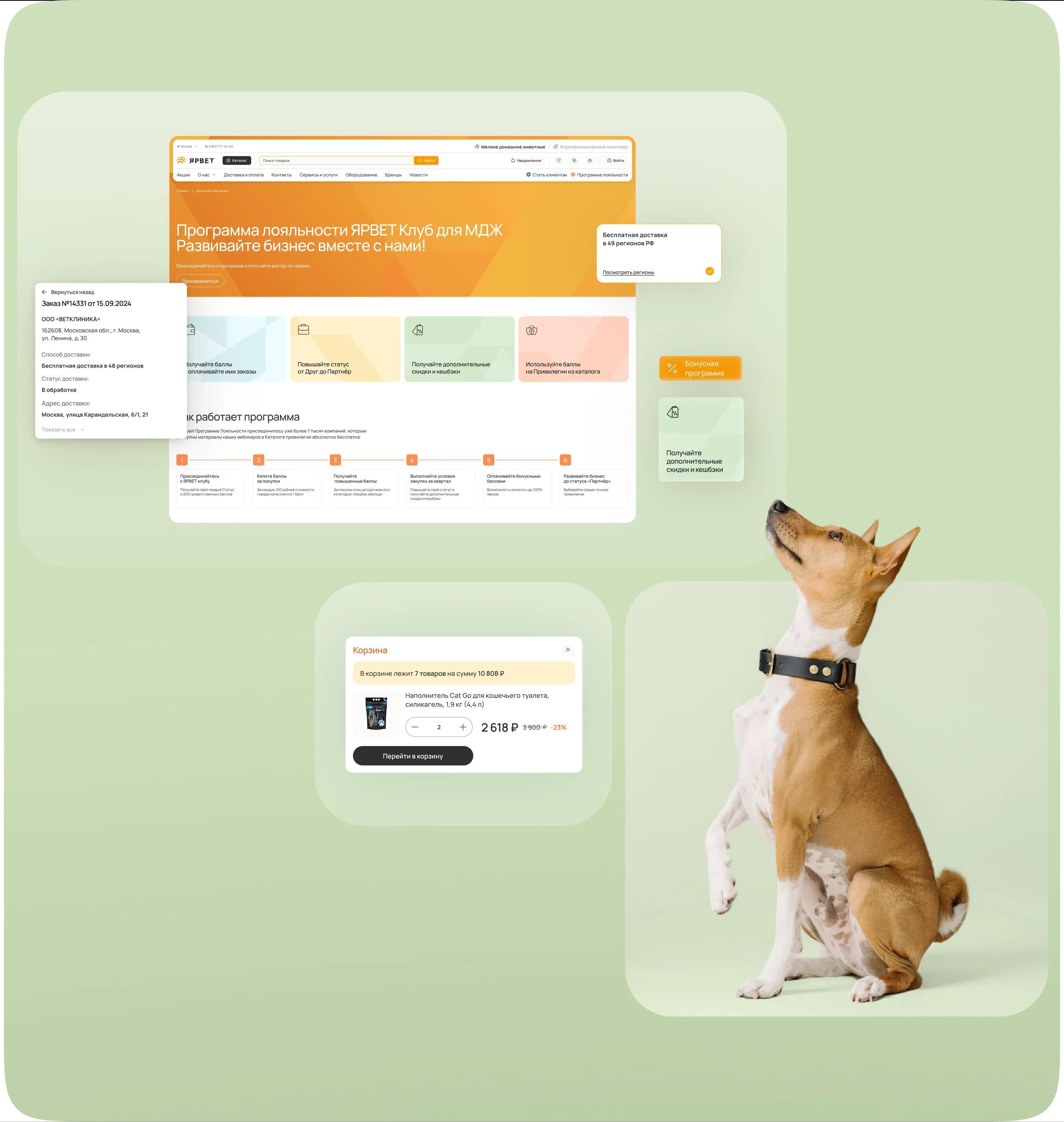
This insight became key to the design of the homepage. Instead of a universal showcase, we created two separate homepages—one for each category. This allowed us to remove irrelevant content, reduce cognitive load, and guide users more quickly toward the desired actions.
Catalog: tools for professionals
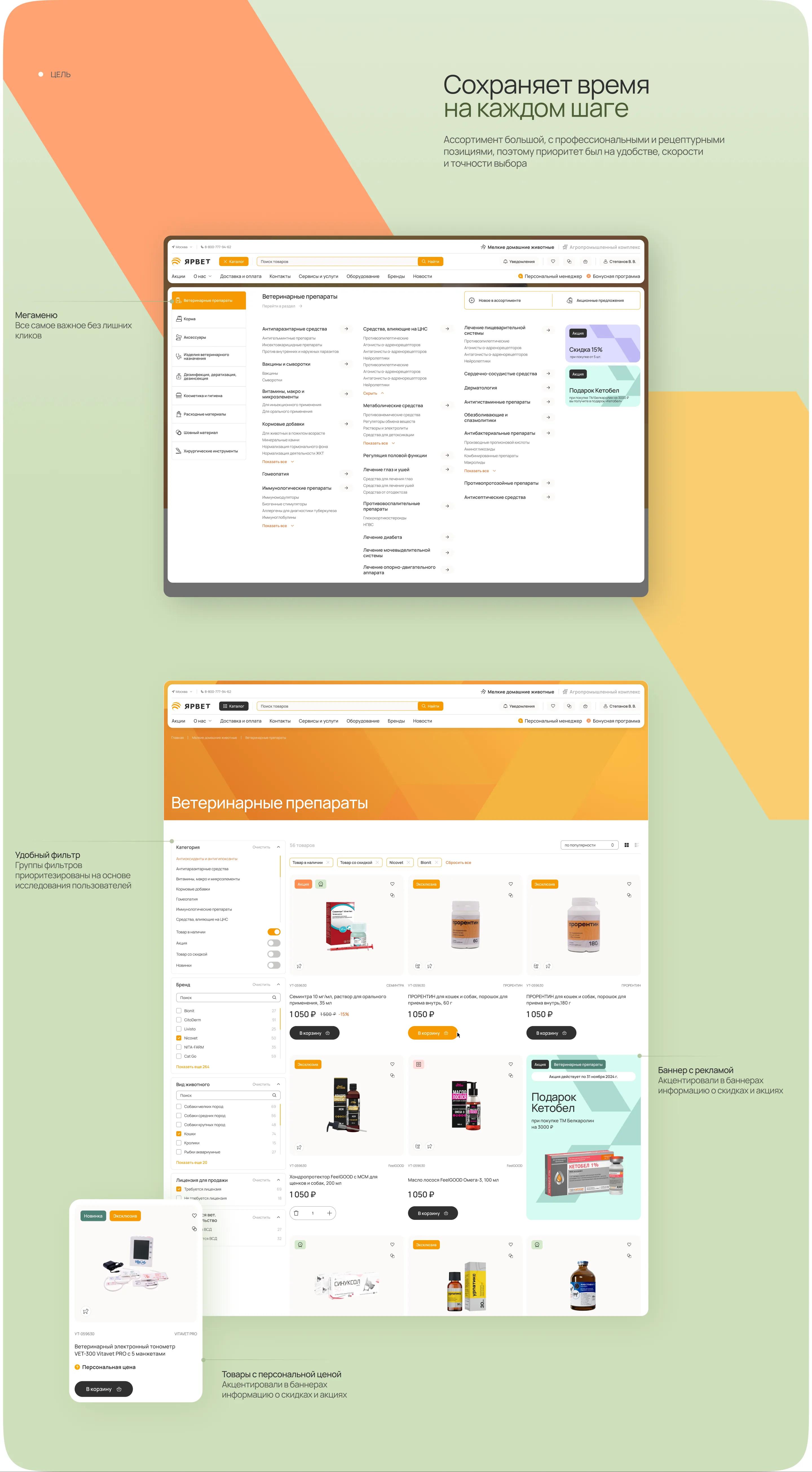
The «Yarvet» catalog is not just a showcase, but a practical tool for wholesale purchasing.
It features a clear category hierarchy, a well-designed mega menu and filters, and search options by product name and active ingredient. The structure allows users to quickly assemble an order, even with a large number of items. Without opening a product card, users can see key information—such as which animals the product is intended for and whether special documentation or a prescription is required—to save time and immediately understand what is available for order.
Analytics have shown that promotions are one of the most visited sections and an important tool for the business. That’s why we’ve integrated promotional blocks directly into the catalog: they’re noticeable but don’t distract from the selection process.
Product card
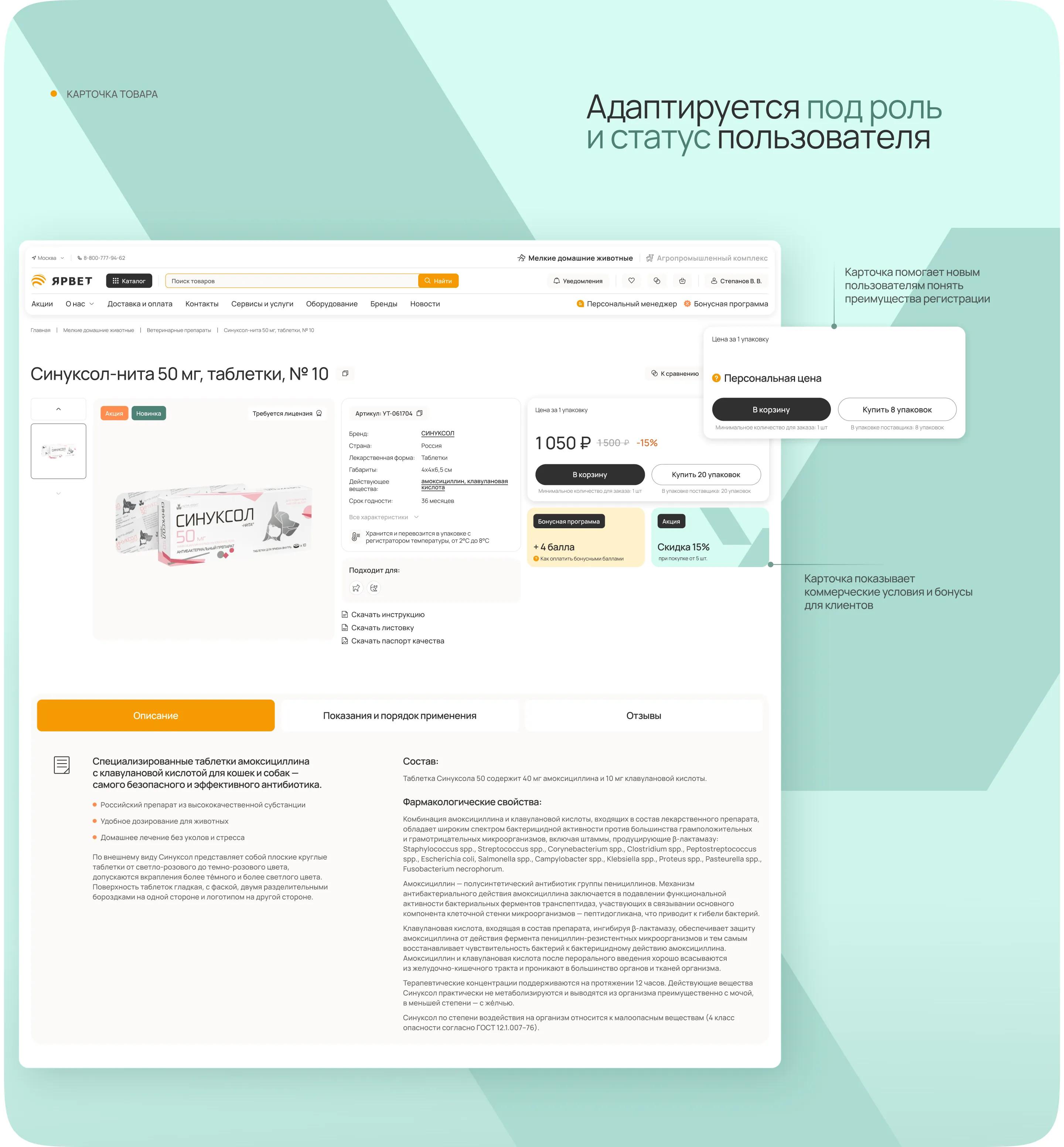
«Yarvet» products — professional pharmaceuticals and specialized animal feeds — come with a wide range of mandatory specifications: storage conditions, dosage forms, dosages, and intended use by animal species. The product names are complex, the instructions are extensive, and the requirements for presenting information are strict.
The card is designed so that key parameters can be read instantly. The top section includes:
• storage temperature,
• form of release,
• available dosages and packaging options with switching options within the card.
Detailed instructions are located below and organized into tabs—the information remains complete, but the first screen isn’t overloaded.
For unregistered users, the price is not displayed. Instead of a blank screen, the interface explains why the price is hidden and immediately suggests what to do to get a personalized offer—register or log in. This way, the absence of a price ceases to be a barrier and becomes part of a clear user flow.
Order placement: seamless process
During the analysis phase, the main order processing workflows were identified: repeat purchases, importing items via a list, handling out-of-stock items, and document verification. These scenarios formed the basis for the design of the shopping cart and checkout process.
Users can quickly repeat a previous order, add items from a list, and immediately view all accompanying documents. If an item is out of stock, alternatives are suggested directly in the shopping cart—without having to return to the catalog. Users remain in the process and can complete their order faster.
Registration
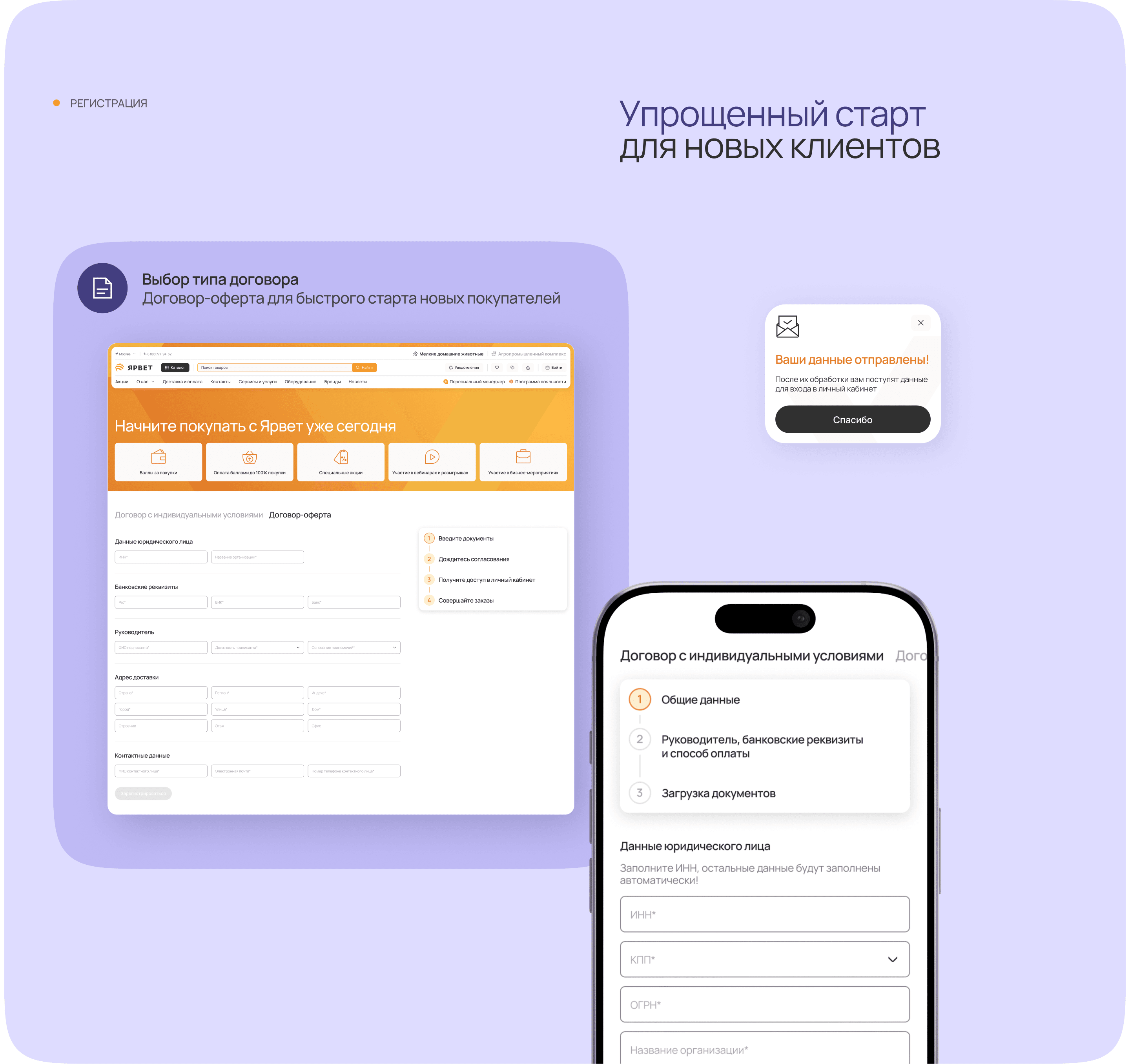
Analysis showed that the previous registration process, which involved a sales representative and a large stack of documents, created a high barrier to entry and overburdened the sales team.
Two scenarios were designed:
• simplified registration for a quick start;
• full online registration with the option to sign a contract and receive personalized terms and special prices.
This reduced the number of dropouts during the registration phase and shifted the workload from managers to the digital channel, while maintaining control over legally significant processes.
Personal account: a control center for different roles
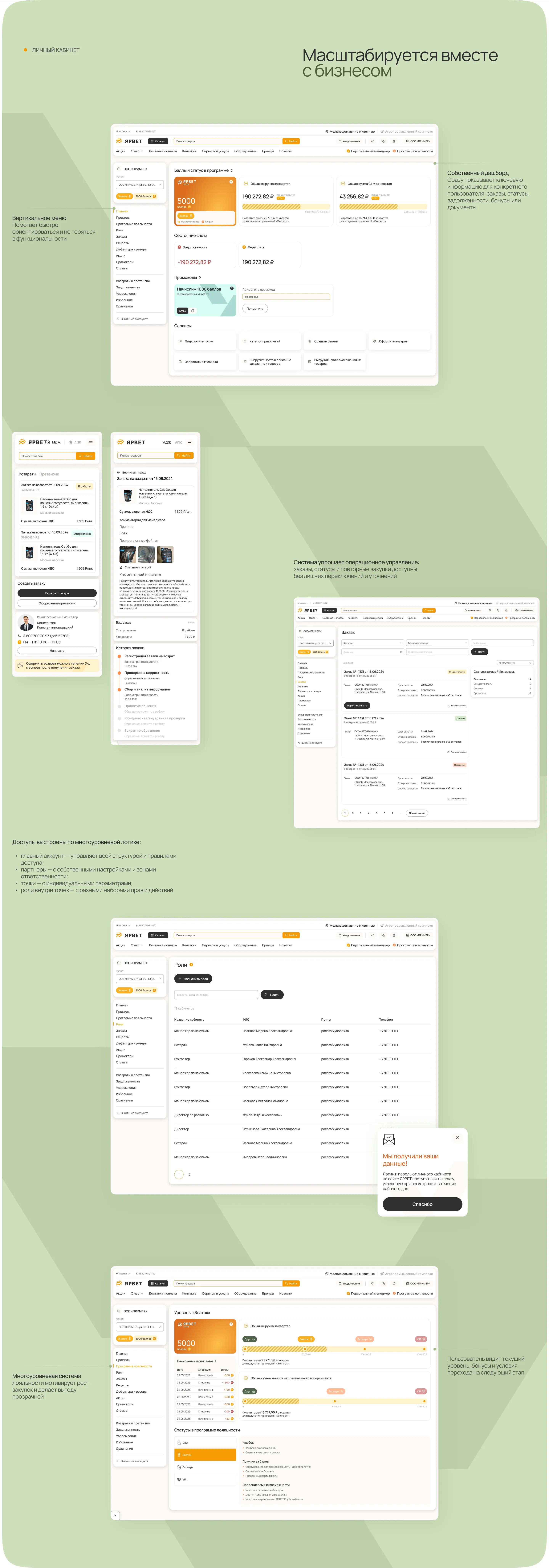
The personal dashboard has become the core of the entire platform. It brings together orders, documents, bonuses, personalized terms, and business structure management. It is not merely an add-on to the online store, but a working environment designed to handle the complex structure of YARVET’s client base.
The main account can flexibly configure access at every level—from partners to individual roles—tailoring the system to the actual business processes of a specific company.
Due to this architecture, a single screen can display dozens of different states, depending on access level, role, and context. We worked through all display options and built in clear interface logic to ensure the system remains predictable even with complex configurations.
The loyalty system is integrated into these scenarios: levels, progress, and bonuses are visualized and directly influence order conditions. As a result, the personal account ceased to be a data archive and became a business management tool.
Design
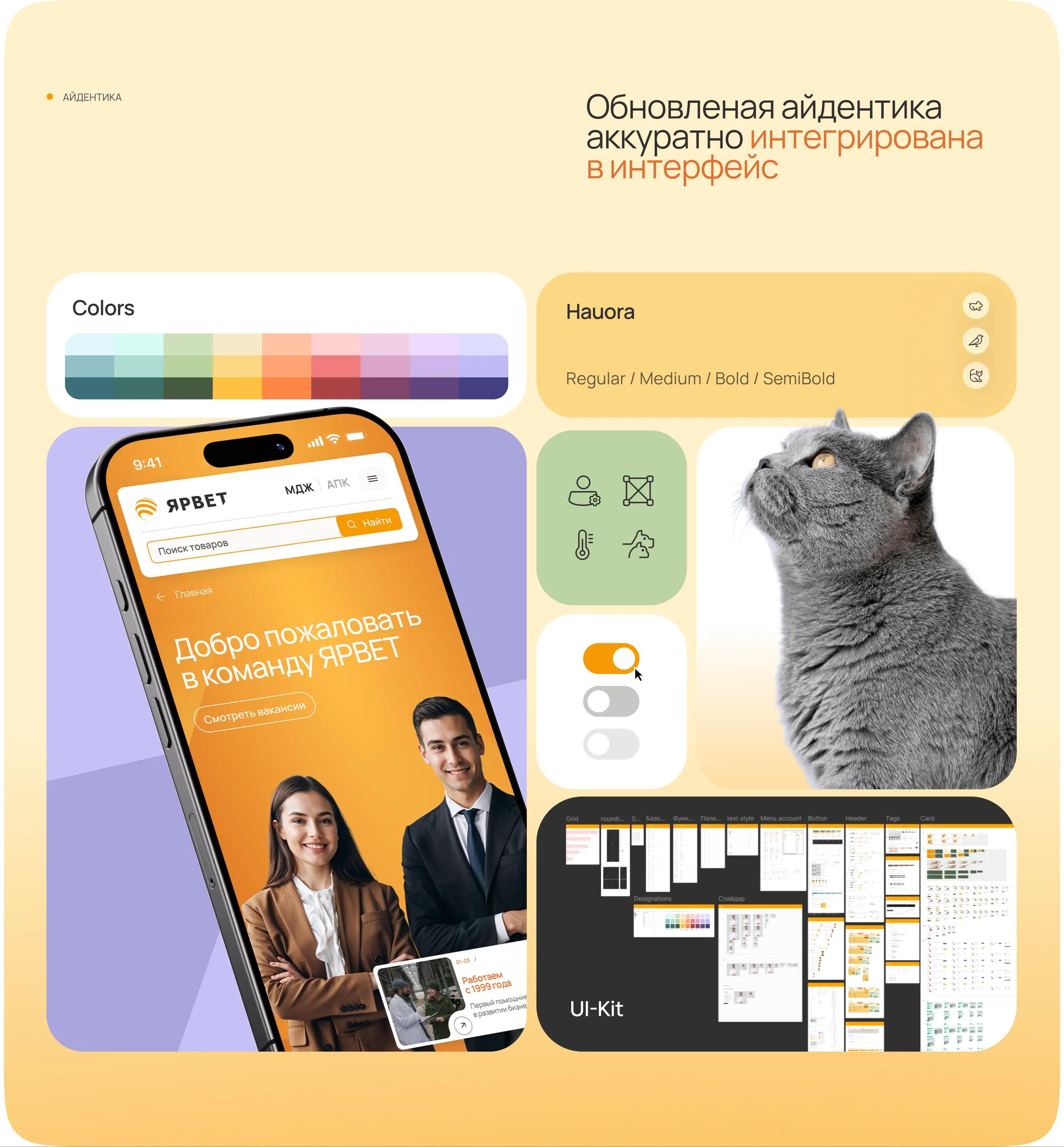
The website’s visual language serves as an extension of the «Yarvet» brand and its positioning as a technologically advanced and reliable partner
The website’s visual language became an extension of the «Yarvet» brand and its positioning as a technologically advanced and reliable partner. The brand identity was updated and seamlessly integrated into the online store and personal account interfaces—without compromising functionality and while maintaining the product’s practical nature.
The visual system is based on:
• a light, calm palette with pastel shades;
• an accent color for key actions, statuses, and important elements;
• geometric typography and signature graphic techniques that create a unified and recognizable style.
Special attention was paid to the visual presentation of the product range and the private label:
• Accents and icons help users navigate the product selection more quickly;
• Product cards are designed so that key information is immediately visible;
• The loyalty system has been given a clear visual representation—levels, progress, bonuses, and available opportunities are always visible and easy to understand.
The design supports the product’s complex logic; it doesn’t distract from tasks but helps users make decisions faster and feel in control of the process.
Results
The project underwent a series of tests while still in the interactive mockup phase. We tested key scenarios—registration, repeat purchases, catalog navigation, the shopping cart, and the user dashboard.
The tests showed that the new logic truly simplifies the process:
• The time required to place a repeat order was reduced by an average of 25–30%;
• Users were less likely to abandon the process during checkout;
• The number of questions regarding navigation and actions decreased by approximately 30%.
After the launch in a live environment, initial data confirmed the hypotheses.
Even over a short period, it became clear that the digital channel had begun to support actual purchasing processes and was gradually taking over the team’s routine workload.